Monday, January 11, 2010

Asset bubbles and optimism

A wonderful blog post by Jeff Ely about how people are working on constructing Economic models which could explain how optimistic investors could inflate a bubble. First, why this is a problem
Alp Simsek asks whether the presence of optimistic traders can inflate the price of assets, say housing prices. It seems obvious, but remember that investment in housing is leveraged using collateralized loans where the house itself is the collateral. If the optimists are borrowing from the “realists” to buy houses at overinflated prices, and they are offering up the house as collateral, then surely the realists aren’t willing to lend?

How the market works
Suppose that you are a realist and you are making a loan to me to purchase a house. A year later we will see whether housing prices have gone up or down. If they go up, I will pay off the loan and realize a profit. If they go down I will default on the loan. A key idea is to understand that the loan effectively makes us partners in the purchase of the house. I own it on the upside (and I pay you back your loan) and you own it on the downside. We pay for the house together too: you contribute the loan amount and I contribute the down pament.

The equilibrium price of the house will be determined by how much we, as partners, are willing to pay. I am an optimist and I would like to pay a lot for it, but I am financially constrained so my contribution to the total price is some fixed amount, my down payment. Thus, our total willingness to pay is determined by how much you are willing to pay to enter this partnership.

This means that it is the "realistic" lender who determines the market price which the asset goes for. However, assume the lender and the borrower agree on the likelihood of default, but the borrower is more optimistic as to what the house would be worth if the borrower did not default. In that case, the borrower would be willing to give up some of that upside in order to get the lender to participate. And the promise of that potential upside makes the deal more attractive for the lender as well, and makes him more willing to lend.

Lots to think about in this.

The Mass Market and the Long Tail

A superb article in the Economist about how well the predictions of The Long Tail have worked out. The bottom-line seems to be that the niche market has grown and the market has grown more diverse, but the big blockbusters have actually increased their market-share.
In short, just because people have more choice does not mean they will opt for more obscure entertainments. That is especially clear in the book trade. A study of the Australian market by Nielsen, a research firm, found that the number of titles bought each year (measured by ISBNs) has risen dramatically, from about 275,000 in 2004 to almost 450,000 in 2007. Niche titles selling fewer than 1,000 copies each accounted for nearly all the growth in variety. Yet their market share fell. In Britain, sales of the ten bestselling books increased from 3.4m to 6m between 1998 and 2008.
Again
Although you might expect people who seek out obscure products to derive more pleasure from their discoveries than those who simply trudge off to see the occasional blockbuster, the opposite is true
apparently because
In “Formal Theories of Mass Behaviour”, William McPhee noted that a disproportionate share of the audience for a hit was made up of people who consumed few products of that type. (Many other studies have since reached the same conclusion.) A lot of the people who read a bestselling novel, for example, do not read much other fiction. By contrast, the audience for an obscure novel is largely composed of people who read a lot. That means the least popular books are judged by people who have the highest standards, while the most popular are judged by people who literally do not know any better. An American who read just one book this year was disproportionately likely to have read “The Lost Symbol”, by Dan Brown. He almost certainly liked it.

Friday, October 16, 2009

Sunday, March 29, 2009

Voodoo Economics

South Park on the state of Economics today.


Hopped up on Coffee

A video of someone like me after a day of drinking coffee at work


HT: Ernie who also to a Malcolm Gladwell article about coffee.

Andrew Gelman has a nice post about someone who performed
a randomized, blinded, placebo-controlled experiment on himself
and
was astonished to see how much the caffeine had affected him. He was stronger -- his power output was 3 percent greater -- and faster. In fact, he said the average speed for his tests when he used caffeine was faster than his fastest speed when he was not using caffeine

Sunday, January 25, 2009

Achilles and Hector

Two birds in full throated song on a damp, dark winter evening in London, while people hurry past, bundled against the cold.

What a sight


Since Time Immemorial

Merriam Webster: a time antedating a period legally fixed as the basis for a custom or right.

While listening to the BBC, I was amazed to learn that this phrase has a precise meaning in English Law.

Checking online, I was even more astonished to learn just how long ago this phrase was defined. Wikipedia:
In 1276, this time was fixed by statute as the 3rd September 1189, the date of the coronation of King Richard I (Richard the Lionheart). Proof of unbroken possession or use of any right since that date made it unnecessary to establish the original grant. In 1832, the plan of dating legal memory from a fixed time was abandoned; instead, it was held that rights which had been enjoyed for twenty years (or as against the Crown thirty years) should not be impeached merely by proving that they had not been enjoyed before.

Sunday, January 11, 2009

Overnight success can be a long time coming

John Kay writes an article on why choice matters
Choice is not an end in itself, but a means to the good services everyone seeks. Choice is working best when no one wants to exercise it.
and on a pernicious myth about markets.
But those who defend the market system are often the system’s worst enemies. I recently listened to a group of businessmen deploring the anti-capitalist tone of much of what is taught in schools. They had a point. But they spoiled it by promoting a description of capitalism that was at once repulsive and false.

They talked about “wealth creation”, although most of what they described seemed to be a diversion of wealth for the benefit of particular individuals rather than the creation of new wealth. They thought private sector activities – such as securities trading and automobile manufacture – created wealth; while public sector activities – such as health and education – used wealth up. They stressed that financial rewards were the mainspring of innovation, apparently unaware that material gain was not even at the back of the minds of those who invented computers, discovered antibiotics or created green revolution crops.
Over at Coding Horror, Jeff Atwood perfectly illustrates this point
Honestly, I look forward to waking up someday two or three years from now and doing the exact same thing I did today: working on the Stack Overflow code, eking out yet another tiny improvement or useful feature. Obviously we want to succeed. But on some level, success is irrelevant, because the process is inherently satisfying. Waking up every day and doing something you love -- even better, surrounded by a community who loves it too -- is its own reward. Despite being a metric ton of work.
Wealth matters: it allows you to focus better on what you really want to do, but I would never be able to get any real work done if the only reason I had to do it was a bonus or promotion. Of course, to be able to take that attitude, you already need to have some amount of basic security.

Thursday, January 01, 2009

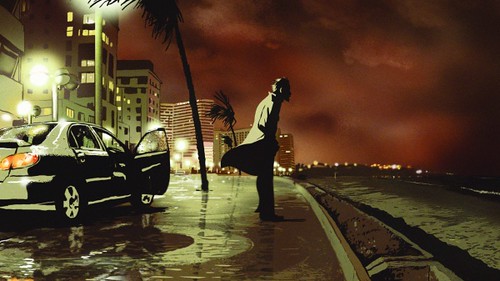
Waltz with Bashir

Watching Waltz with Bashir: A very good start to the year, and the second great animated movie I have seen this year.

I was drawn to seeing this movie by the poster above: it felt like a scene from Marine Drive in Mumbai. It is a documentary but, being an animation, it has no need for reconstructions of events which nobody filmed. Too much sepia, but the visuals are wonderful, the figures move stiffly but still do a great job of conveying emotion through body language, and the movie has a glorious soundtrack, and a very droll sense of humour.

I bombed Beirut, I bombed Sidon:


and Enola Gay


How distributed decision making typical of bureaucracies can help create atrocities by dispersing responsibility, how religions are only occasionally about what people believe, and how movies really are a multimedia art form.

Every single trailer in the theater felt like an advertisement for a computer game. The invention of photography forced painting to discover virtues other than realism, and the spread of the movies may have compelled novelists to discover qualities other than plot and scene. What will this new art do to old ones? We will have more movies which are made to go right into a computer game, but will we also see more works like Waltz with Bashir?

Sunday, December 21, 2008

Merry Christmas

A broadcast by the BBC of the Choir of Christ College, Cambridge, celebrating Christmas during the blackout of 1939.

There is something about fire

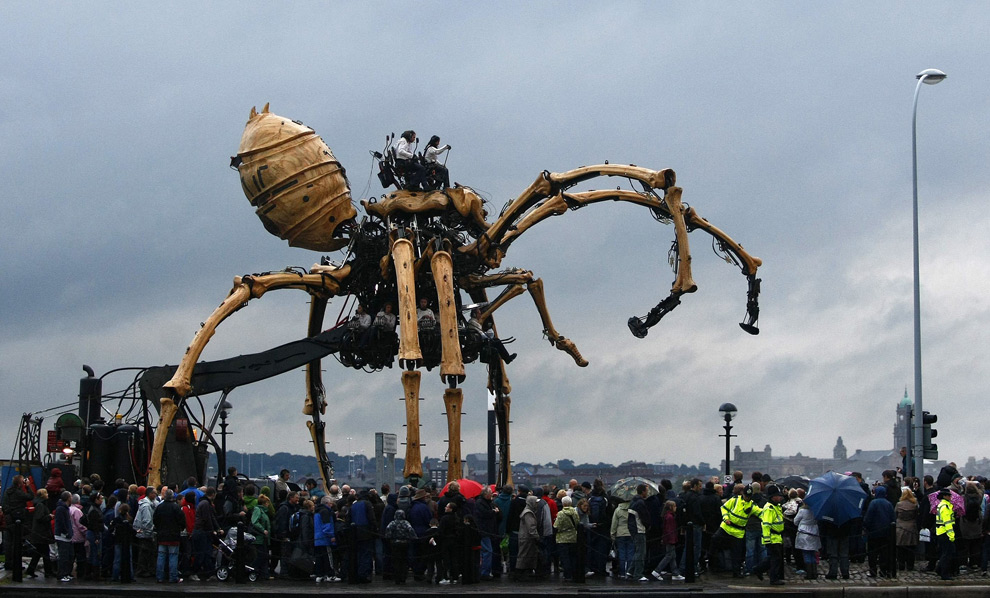
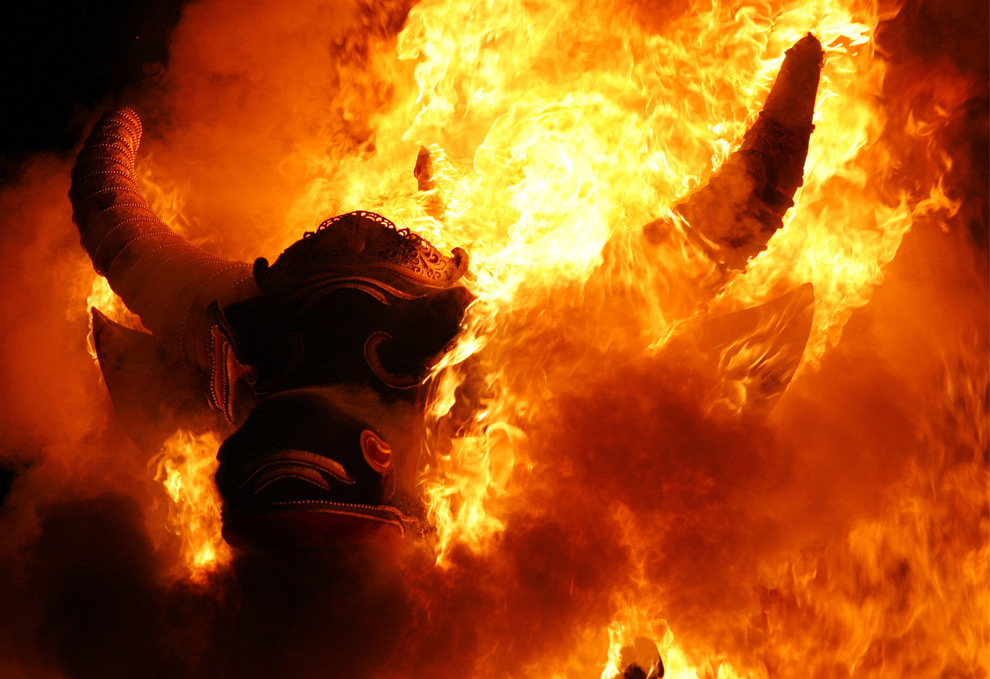
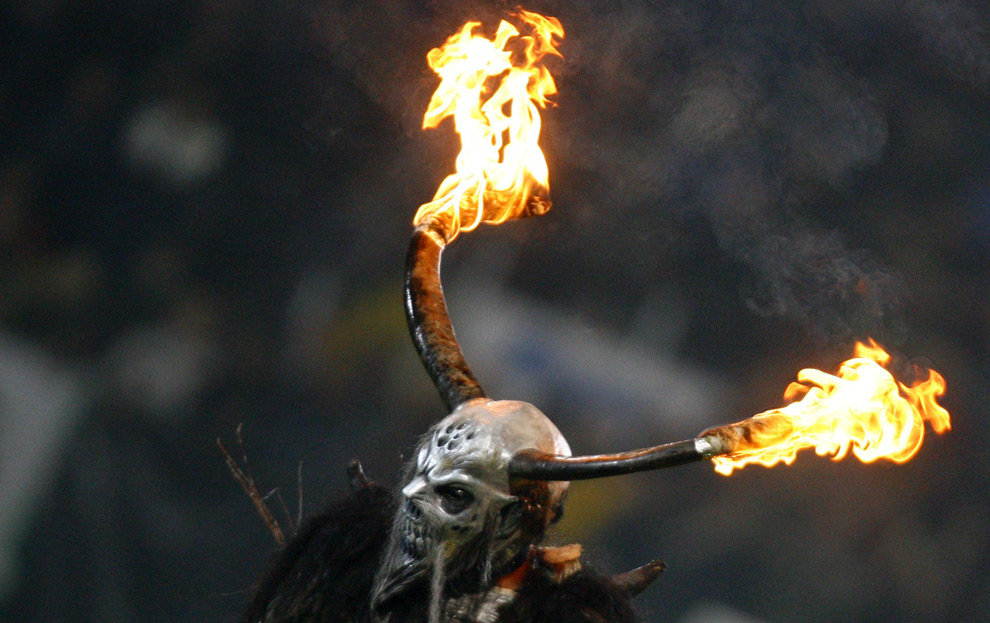
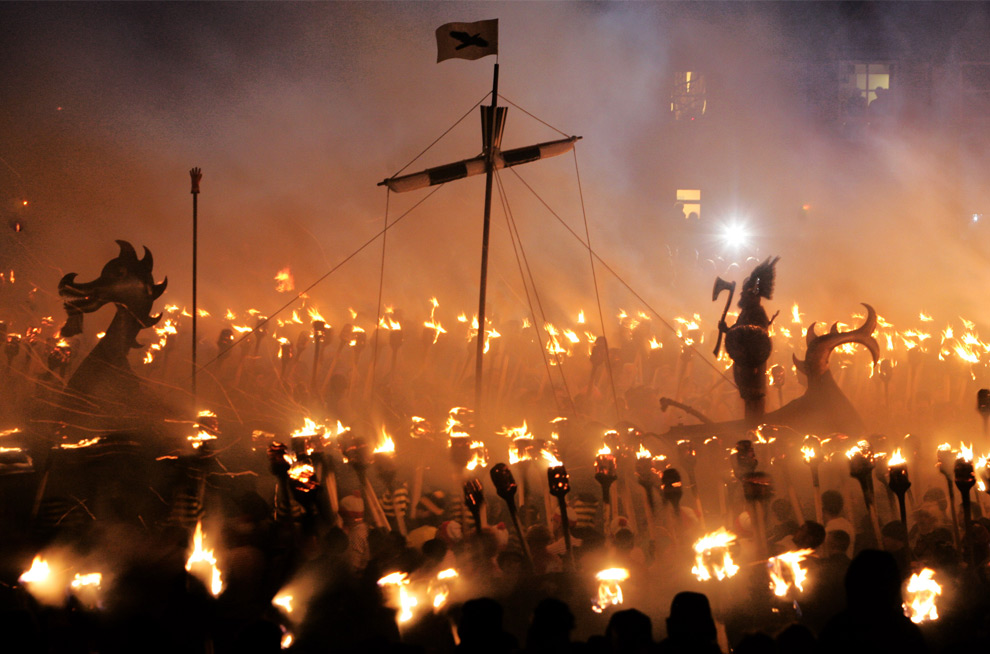
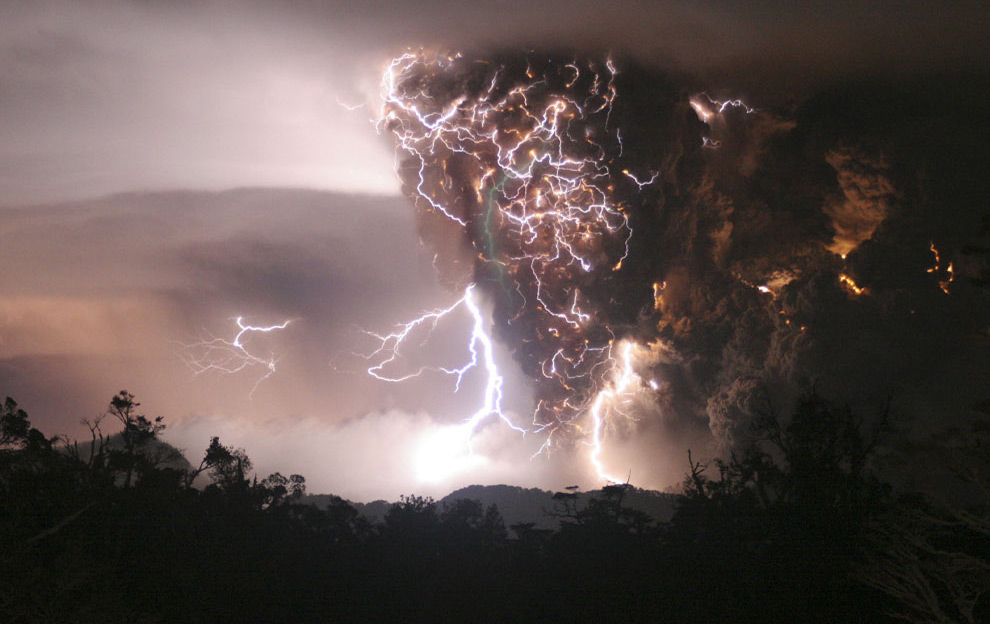
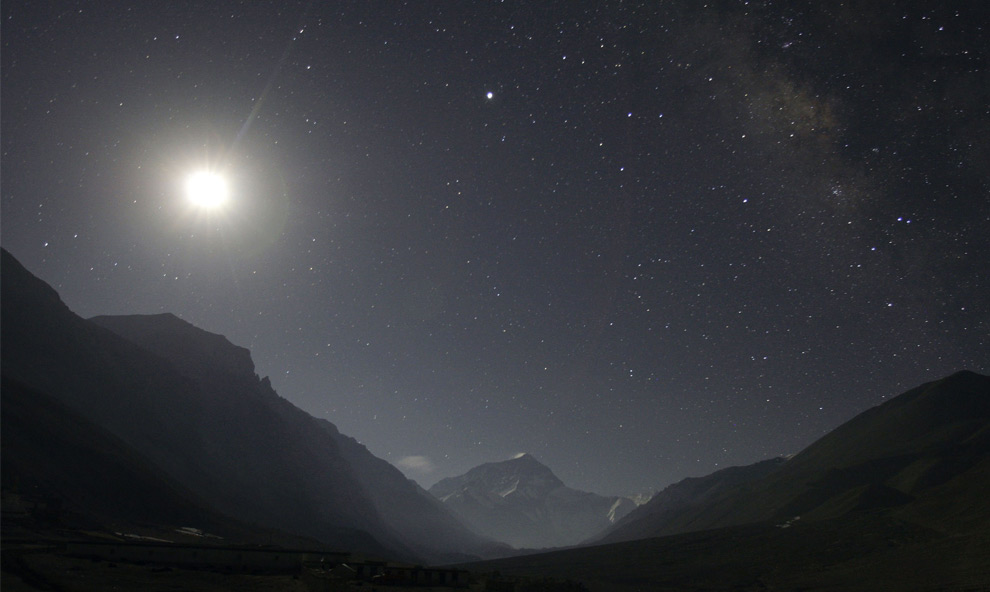
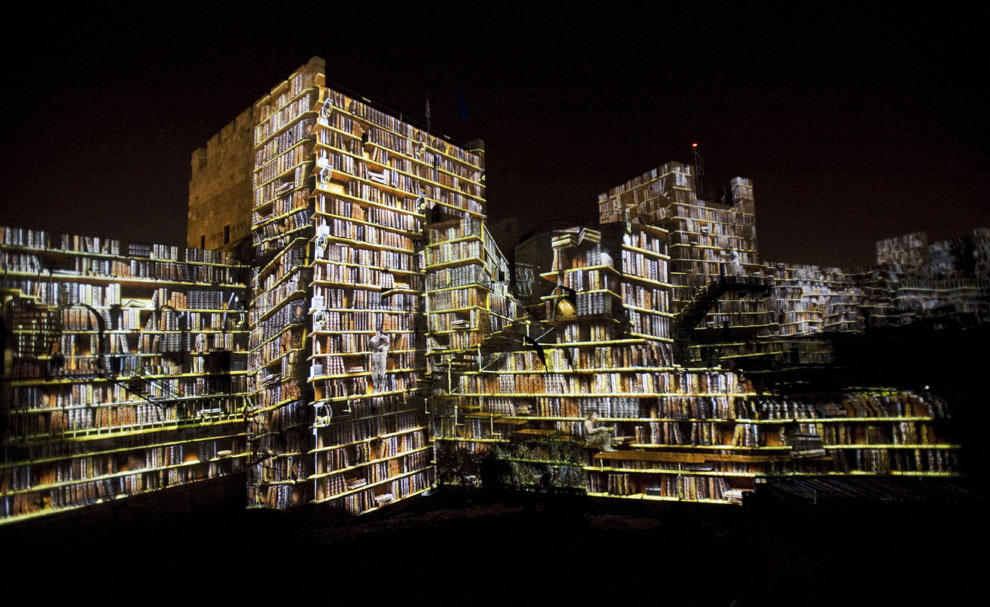
My favourites from among the "images of the year", published by the Boston Globe. (Text taken directly from the article.)

HT: Paul Kedrosky.

A giant mechanical spider, part of a piece of free theater by French company La Machine entitled "Les Mecaniques Servants", walks along the waterfront in Liverpool, England.


A bull sarcophagus in which a member of the Ubud royal family was cremated burns during the funeral ceremony in Ubud, Bali, Indonesia


A man in a traditional "Perchten" costume performs during an Austrian league soccer match in Ried, Austria


The Guizer Jarl is silhouetted as members of his Viking Squad walk around a long boat with burning torches during the annual Up Helly Aa Festival


Lightning bolts appear above and around the Chaiten volcano, as it began its first eruption in thousands of years


The moon and stars light up Mount Everest, also known as Qomolangma, as seen from near Everest Base Camp in the Tibet Autonomous Region


Images of books on shelves are seen projected on the walls of the Tower of David in Jerusalem's Old City

North Face


One of the most harrowing movie experiences of my life.

Sunday, December 07, 2008

Peter Sellers

Richard III: its been a hard day's night.

HT: Alex Ross


Thursday, November 27, 2008

Mumbai

Listening to the nauseating effluvia of Arundhati Roy on BBC Radio 4;  how much better Emily Dickinson is at a time like this.
After great pain, a formal feeling comes
The Nerves sit ceremonious, like Tombs
The stiff Heart questions was it He, that bore,
And Yesterday, or Centuries before?

The Feet, mechanical, go round
Of Ground, or Air, or Ought
A Wooden way
Regardless grown,
A Quartz contentment, like a stone

This is the Hour of Lead
Remembered, if outlived,
As Freezing persons recollect the Snow
First-Chill-then Stupor-then the letting go

Monday, November 24, 2008

Question

Heard on this show on BBC Radio 4:
You keep reading about dead people who are identified using their dental records. If we don't know who they are, how do we know who their dentist is?

Phrase of the day

Paraprosdokian
I want to die like my father, quietly, in his sleep—not screaming and terrified like his passengers
- Bob Monkhouse

A neat step

The Thai army knows what to do with prima donna generals
A MAVERICK Thai general who has threatened to bomb anti-government protesters and drop snakes on them from helicopters has been reassigned as an aerobics teacher, the Bangkok Post said on Friday.
HT: Paul Kedrosky