Tuesday, February 20, 2007

Mirror, mirror on the wall..

Over at Chatty Apes, Jason Wheeden describes a very interesting finding.

Measurable symmetry accounts for less than 1% of the variance in the attractiveness of women's faces and less than 3% of the variance of the attractiveness of men's faces. Before we went and checked, we had both believed the widely circulated story that symmetry was a big deal in attractiveness.

Of course, I have come across this story myself, and believed it. One of the reasons why people believed this theory is that there is a plausible "explanation" for why people find symmetry attractive. This is exactly why scientists are supposed to replicate the findings of others. Feynman said that Science is what we have learned about how to keep from fooling ourselves. However, at least in this case, the problem was not that others did not try and replicate the results.

So how did it happen that so many of us believed that symmetry was a big deal in attractiveness judgments? There were studies that said so, obviously. But when we looked at the details, it turned out that the initial studies showing big effects typically involved samples of less than 20 faces each, which is irresponsibly small for correlational studies with open-ended variables. Once the bigger samples starting showing up, the effect basically disappeared for women and was shown to be pretty low for men. But no one believed the later, bigger studies, even most of their own authors -- pretty much everyone in my business still thinks that symmetry is a big deal in attractiveness.

So, the first lesson I learned: Small samples are dangerous. They're so dangerous that we need to force larger samples. How? My solution has been to ditch the old p<.05 significance standard. Right now, most social scientists allow themselves to call something a real finding if there is less than a 1 in 20 chance that it's from random noise. It's a standard that arose before computers, in a day when scientists ran their numbers by hand and so just didn't run very many numbers. These days, all you have to do to basically ensure at least one significant finding is to measure 7 variables -- the resulting correlation table has 21 correlations, and, just at random, you'd expect at least one to be p<.05. Look at my dissertation or any of my published work (two new ones are coming out soon), and you'll find that I'm using p<.005 -- a 1 in 200 standard. I don't think anyone has noticed -- I haven't had any reviewers comment on it at all. But what the .005 standard does is force larger samples, leading to more stable estimates, leading to more replicable results. So that was my first lesson from the health-attractiveness paper -- false positives are easy to get and powerfully resilient to correction, so we need better studies in the first place, which means bigger samples, in which case the only way to police it is using better significance criteria.

It appears that the site has been down for quite some time- I am relying on the Google Cache of the post, and I am quoting extensively in case the cache becomes unavailable. This is one reason I blog, to keep a copy of all the stuff I find interesting- just in case the source disappears. Redundancy.

HT: Robin Hanson at Overcoming Bias

Wednesday, February 14, 2007

The Perverse Power of Praise

Arnold Kling links to a fascinating article in New York Magazine on the effects of praise. The gist is that children respond to incentives. If they receive praise for being smart, they try to look smart, even at the cost of becoming underperformers, or cheats. If they receive praise for the effort they put in, they work harder and get smarter.

For the past ten years, psychologist Carol Dweck and her team at Columbia (she’s now at Stanford) studied the effect of praise on students in a dozen New York schools. Her seminal work—a series of experiments on 400 fifth-graders—paints the picture most clearly.

Dweck sent four female research assistants into New York fifth-grade classrooms. The researchers would take a single child out of the classroom for a nonverbal IQ test consisting of a series of puzzles—puzzles easy enough that all the children would do fairly well. Once the child finished the test, the researchers told each student his score, then gave him a single line of praise. Randomly divided into groups, some were praised for their intelligence. They were told, “You must be smart at this.” Other students were praised for their effort: “You must have worked really hard.”

Then

the students were given a choice of test for the second round. One choice was a test that would be more difficult than the first, but the researchers told the kids that they’d learn a lot from attempting the puzzles. The other choice, Dweck’s team explained, was an easy test, just like the first. Of those praised for their effort, 90 percent chose the harder set of puzzles. Of those praised for their intelligence, a majority chose the easy test. The “smart” kids took the cop-out.

Why did this happen? “When we praise children for their intelligence,” Dweck wrote in her study summary, “we tell them that this is the name of the game: Look smart, don’t risk making mistakes.” And that’s what the fifth-graders had done: They’d chosen to look smart and avoid the risk of being embarrassed.

In a subsequent round, none of the fifth-graders had a choice. The test was difficult, designed for kids two years ahead of their grade level. Predictably, everyone failed. But again, the two groups of children, divided at random at the study’s start, responded differently. Those praised for their effort on the first test assumed they simply hadn’t focused hard enough on this test. “They got very involved, willing to try every solution to the puzzles,” Dweck recalled. “Many of them remarked, unprovoked, ‘This is my favorite test.’ ” Not so for those praised for their smarts. They assumed their failure was evidence that they weren’t really smart at all. “Just watching them, you could see the strain. They were sweating and miserable.”

Having artificially induced a round of failure, Dweck’s researchers then gave all the fifth-graders a final round of tests that were engineered to be as easy as the first round. Those who had been praised for their effort significantly improved on their first score—by about 30 percent. Those who’d been told they were smart did worse than they had at the very beginning—by about 20 percent.

Dweck had suspected that praise could backfire, but even she was surprised by the magnitude of the effect. “Emphasizing effort gives a child a variable that they can control,” she explains. “They come to see themselves as in control of their success. Emphasizing natural intelligence takes it out of the child’s control, and it provides no good recipe for responding to a failure.”

In follow-up interviews, Dweck discovered that those who think that innate intelligence is the key to success begin to discount the importance of effort. I am smart, the kids’ reasoning goes; I don’t need to put out effort. Expending effort becomes stigmatized—it’s public proof that you can’t cut it on your natural gifts.

Repeating her experiments, Dweck found this effect of praise on performance held true for students of every socioeconomic class. It hit both boys and girls—the very brightest girls especially (they collapsed the most following failure). Even preschoolers weren’t immune to the inverse power of praise.

Dweck's theories were tried out at the Life Sciences Secondary School in East Harlem

Life Sciences is a health-science magnet school with high aspirations but 700 students whose main attributes are being predominantly minority and low achieving. Blackwell split her kids into two groups for an eight-session workshop. The control group was taught study skills, and the others got study skills and a special module on how intelligence is not innate. These students took turns reading aloud an essay on how the brain grows new neurons when challenged. They saw slides of the brain and acted out skits. “Even as I was teaching these ideas,” Blackwell noted, “I would hear the students joking, calling one another ‘dummy’ or ‘stupid.’” After the module was concluded, Blackwell tracked her students’ grades to see if it had any effect.

It didn’t take long. The teachers—who hadn’t known which students had been assigned to which workshop—could pick out the students who had been taught that intelligence can be developed. They improved their study habits and grades. In a single semester, Blackwell reversed the students’ longtime trend of decreasing math grades.

The only difference between the control group and the test group were two lessons, a total of 50 minutes spent teaching not math but a single idea: that the brain is a muscle. Giving it a harder workout makes you smarter. That alone improved their math scores.

This research suggests that the "Self-esteem" movement is correct: how children feel about themselves is a major determinant of how they do in life. Correct, but in an unexpected way.

Dweck and Blackwell’s work is part of a larger academic challenge to one of the self-esteem movement’s key tenets: that praise, self-esteem, and performance rise and fall together. From 1970 to 2000, there were over 15,000 scholarly articles written on self-esteem and its relationship to everything—from sex to career advancement. But results were often contradictory or inconclusive. So in 2003 the Association for Psychological Science asked Dr. Roy Baumeister, then a leading proponent of self-esteem, to review this literature. His team concluded that self-esteem was polluted with flawed science. Only 200 of those 15,000 studies met their rigorous standards.

After reviewing those 200 studies, Baumeister concluded that having high self-esteem didn’t improve grades or career achievement. It didn’t even reduce alcohol usage. And it especially did not lower violence of any sort. (Highly aggressive, violent people happen to think very highly of themselves, debunking the theory that people are aggressive to make up for low self-esteem.) At the time, Baumeister was quoted as saying that his findings were “the biggest disappointment of my career.”

Children respond to praise, but they take into account not only what they are being for (for being smart versus for trying hard) but also why. As with any currency, too much supply leads to devaluation.

Psychologist Wulf-Uwe Meyer, a pioneer in the field, conducted a series of studies where children watched other students receive praise. According to Meyer’s findings, by the age of 12, children believe that earning praise from a teacher is not a sign you did well—it’s actually a sign you lack ability and the teacher thinks you need extra encouragement. And teens, Meyer found, discounted praise to such an extent that they believed it’s a teacher’s criticism—not praise at all—that really conveys a positive belief in a student’s aptitude.

In the opinion of cognitive scientist Daniel T. Willingham, a teacher who praises a child may be unwittingly sending the message that the student reached the limit of his innate ability, while a teacher who criticizes a pupil conveys the message that he can improve his performance even further.

Cheap praise can even corrode character
Scholars from Reed College and Stanford reviewed over 150 praise studies. Their meta-analysis determined that praised students become risk-averse and lack perceived autonomy. The scholars found consistent correlations between a liberal use of praise and students’ “shorter task persistence, more eye-checking with the teacher, and inflected speech such that answers have the intonation of questions.”

Dweck’s research on overpraised kids strongly suggests that image maintenance becomes their primary concern—they are more competitive and more interested in tearing others down. A raft of very alarming studies illustrate this.

In one, students are given two puzzle tests. Between the first and the second, they are offered a choice between learning a new puzzle strategy for the second test or finding out how they did compared with other students on the first test: They have only enough time to do one or the other. Students praised for intelligence choose to find out their class rank, rather than use the time to prepare.

In another, students get a do-it-yourself report card and are told these forms will be mailed to students at another school—they’ll never meet these students and don’t know their names. Of the kids praised for their intelligence, 40 percent lie, inflating their scores. Of the kids praised for effort, few lie.

When students transition into junior high, some who’d done well in elementary school inevitably struggle in the larger and more demanding environment. Those who equated their earlier success with their innate ability surmise they’ve been dumb all along. Their grades never recover because the likely key to their recovery—increasing effort—they view as just further proof of their failure. In interviews many confess they would “seriously consider cheating.”

And, of course, there is a biological basis to the ability to persist.

Dr. Robert Cloninger at Washington University in St. Louis located the circuit in a part of the brain called the orbital and medial prefrontal cortex. It monitors the reward center of the brain, and like a switch, it intervenes when there’s a lack of immediate reward. When it switches on, it’s telling the rest of the brain, “Don’t stop trying. There’s dopa [the brain’s chemical reward for success] on the horizon.” While putting people through MRI scans, Cloninger could see this switch lighting up regularly in some. In others, barely at all.

What makes some people wired to have an active circuit?

Cloninger has trained rats and mice in mazes to have persistence by carefully not rewarding them when they get to the finish. “The key is intermittent reinforcement,” says Cloninger. The brain has to learn that frustrating spells can be worked through. “A person who grows up getting too frequent rewards will not have persistence, because they’ll quit when the rewards disappear."

The article does not claim there are no innate differences between children. People have traditionally worried about how labelling can harm ordinary children when they compare themselves to the gifted, but even gifted children suffer from excessive emphasis on ability rather than effort.

Friday, February 09, 2007

Prizes for all

The New York Times recently published an article on how prizes could be used to encourage innovation. Prizes were common in the 18th century.

Most famously, the British Parliament offered the £20,000 longitude prize to anyone who figured out how to pinpoint location on the open sea.

Times changed.

Eventually, though, prizes began to be replaced by grants that awarded money upfront. Some of this was for good reason. As science became more advanced, scientists often needed to buy expensive equipment and hire a staff before having any chance of making a discovery.

But grants also became popular for a less worthy reason: they made life easier for the government bureaucrats who oversaw them and for the scientists who received them. Robin Hanson, an economist at George Mason University who has studied the history of prizes, points out that they create a lot of uncertainty — about who will receive money and when a government will have to pay it. Grants, on the other hand, allow a patron (and the scientists advising that patron) to choose who gets the money. “Bureaucracies like a steady flow of money, not uncertainty,” said Mr. Hanson, who worked as a physicist at NASA before becoming an economist. “But prizes are often more effective if what you want is scientific progress.”

Recently, though, prizes have made a comeback in the private sector- the article describes two: a million-dollar prize which Netflix is offering for any system that is at least 10 percent better than their own system (Cinematch) at predicting how many stars someone would give a movie, and the X Prize, which was created in 1996 as a $10 million purse for the first private manned flight into space. The latest prediction model is already 6.75% better than Cinematch, and there are 4.5 years to go before the prize expires. The X-prize was awarded just eight years after it was announced.
The advantages of prizes are two-fold:

They pay for nothing but performance, and they ensure that anyone with a good idea — not just the usual experts — can take a crack at a tough problem. Much to the horror of the leading astronomers of the day, a clockmaker ultimately claimed the longitude prize

Another day, another prize.

Richard Branson and Al Gore announced today a $25 million prize for the best way to remove significant amounts of carbon dioxide from the atmosphere.

The key insight is that the best way to handle a problem is not to impose a solution, but to provide people with incentives to come up with their own solutions.

Thursday, February 08, 2007

The psychology of power

Anders Sandberg blogs on new research that explores just how being in a position of power changes how we deal with others. The bottomline

it was found that high-power subjects also tended to assume other people had the same information that they had (the "telepathic boss" problem - the boss assumes that everybody knows what he knows and want). They were also less accurate than low-power subjects at judging emotional expressions. There were also anticorrelations between reports of general feelings of being in power in one's life and tendency to take other's perspective. Overall high-power people seem to anchor too heavily on their own vantage point and this impairs their ability to consider what others see, think and feel.

And

In general power bias would make the empowered people tend to think they have more support from others in their views than they have. Altruists in power would be even less concerned with individual variations in goals and values - i.e. they would tend to become more egalitarian and paternalist. Egoists in power would become more concerned about the ambitions of others, i.e. paranoid.

Thus, even altruists are corrupted- probably assuming that they are anyway doing it "for the good of all".

Perception

I have been reading "Stumbling on Happiness" by Daniel Gilbert. Its a good as they say it is.Two experiments on how our brains process sensory information jumped out at me.

Researchers tape-recorded the sentence 'The state governors met with their respective legislatures convening in the capital city'. Then they doctored the tape, substituting a cough for the first 's' in 'legislatures'. Volunteers heard the cough alright, but they heard it happening between the words- they heard the missing 's' too. Even when they were specifically instructed to listen for the missing sound, and even when they were given thousands of trials of practice, volunteers were unable to name the missing letter that their brains knew ought to be there and had thus helpfully supplied.

I wonder what would have happened if two coughs had been introduced- one overlaying the first 's' (as before)- and one in between the words (where the brain shifted the cough so we would "hear" the 's' that had been obscured).

Even cooler was this one

Volunteers listened to a recording of the word 'eel' preceded by a cough (which I will denote with *). The volunteers heard the word 'peel' when the it was embedded in the sentence 'The *eel was on orange', but the heard the word 'heel' when it was embedded in the sentence 'The *eel was on the shoe'. This is a striking finding because the two sentences differ only in their final word, which means that volunteers' brains had to wait for the final word of the sentence before they could supply the information that was missing from the second word. But they did it, and they did it so smoothly and quickly that volunteers actually heard the missing information being spoken in its proper position.

Lots more.

The case for limited Democracy

In this post, Chris Dillow argues that there is a place for non-representative institutions such as the House of Lords. He claims that

Representative democracy, then, would drive out virtuous people

and that

Maybe it shows the difference between political and market institutions. Market institutions are a way of ensuring that vices work for the public good, so bad men can do good things. Political institutions, however, have an adverse selection effect, ensuring that virtuous men can do no good.

An interesting argument, coming from someone on the Left.

Last night, I was watching a PBS documentary on one such non-representative institution: the Supreme Court of the United States. This episode was about how the Supreme Court stepped in to massively expand the rights of American individuals in the second half of the 20th century. What struck me was just how undemocratically the Supreme Court acted in most of these cases. In Brown v. Board of Education and Cooper v. Aaron, the Court unanimously ruled that segregation in public schools was unconstitutional. Segregation was hugely popular among the white majority in the Southern United States. The laws which were the basis of segregation were passed by democratically elected legislatures, and enthusiastically enforced by governments which were accountable to the electorate. In Miranda v. Arizona, the Court ruled that

detained criminal suspects, prior to police questioning, must be informed of their constitutional right to an attorney and against self-incrimination.

The Republicans argued that such laws needlessly tied the hands of the police, and this was one of the planks on which Ronald Reagan won the Presidency. These were cases in which one branch of the Government had to step in and restrain another branch, and the only reason the Court could do this was that they were not accountable to the electorate.
Why did the Legislature introduce these laws in the first place? Part of the answer may have been that they could thus pander to the prejudices of their electorate, while incurring none of the cost. Sometime back, Don Boudreax quoted an article by Thomas Sowell that suggests that this may have been true in the case of "Jim Crow" laws regarding public transport.

It was politics that segregated the races because the incentives of the political process are different from the incentives of the economic process. Both blacks and whites spent money to ride the buses but, after the disenfranchisement of black voters in the late 19th and early 20th century, only whites counted in the political process.

Katie blogged on the same article

Private owners of streetcar, bus, and railroad companies in the South lobbied against the Jim Crow laws while these laws were being written, challenged them in the courts after the laws were passed, and then dragged their feet in enforcing those laws after they were upheld by the courts.

Unconstrained democracy has a tendency to descend into demagoguery. To oversimplify, democracy is a tool to check the power of governments by making them accountable to the populace. A constitution is (among other things) a tool for checking the power of the people to use their elected government to tyrannize minorities.

Thursday, November 02, 2006

The worst mistake ever?

Of course, I went ahead and downloaded the new book by Gregory Clark. I have NOT read it- it is 453 pages long- but the opening passages are striking.

The basic outline of world economic history is surprisingly simple. Indeed it can be summarized in one diagram: figure 1.1. Before 1800 income per person – the food, clothing, heat, light, housing, and furnishings available per head - varied across societies and epochs. But there was no upward trend. A simple but powerful mechanism explained in this book, the Malthusian Trap, kept incomes within a range narrow by modern standards.

Thus the average inhabitant in the world of 1800 was no better off than the average person of 100,000 BC. Indeed, most likely, consumption per person declined as we approached 1800. The lucky denizens of wealthy societies such as eighteenth century England or the Netherlands managed a material life style equivalent to the Neolithic. But the vast swath of humanity in East and South Asia, particularly in Japan and in China, eked out a living in conditions that seem to have been significantly poorer than those of cavemen.

The quality of life quality also failed to improve on any other observable dimension. Life expectancy was the same in 1800 as for the original foragers of the African savannah, 30-35 years at birth. Stature, a measure both of the quality of the diet, and of children’s exposure to disease, was higher in the Neolithic than in 1800. And while foragers likely satisfied their material wants with small amounts of work, the modest comforts of the English in 1800 were purchased only through a life of unrelenting drudgery. Nor did the variety of their material consumption improve. The average forager had a diet, and a work life, much more varied than the typical English worker of 1800 even though the English table by them included such exotics as tea, pepper, and sugar.

Finally hunter-gatherer societies are egalitarian. Material consumption varies little across the members. In contrast great inequality was a pervasive feature of the agrarian economies that dominated the world of 1800. The riches of a few dwarfed the pinched allocation of the masses. Considering even the broadest definition of material life, the trend, if anything, was downward from the Stone Age to 1800. And for the poor of 1800, those who lived on unskilled wages alone, the hunter-gatherer life would have been a clear improvement. Some will object that material living conditions, even including life expectancy and work efforts, give little impression of the other dimensions by which life changed between the Neolithic and 1800: dimensions such as security, stability, and personal safety. But we shall see below that however broadly we picture living conditions, things do not improve before 1800.

This reminded me of the famous article in Discover, by Jared Diamond, arguing that we should never have invented Agriculture.

Scattered throughout the world, several dozen groups of so-called primitive people, like the Kalahari bushmen, continue to support themselves that way. It turns out that these people have plenty of leisure time, sleep a good deal, and work less hard than their farming neighbors. For instance, the average time devoted each week to obtaining food is only 12 to 19 hours for one group of
Bushmen, 14 hours or less for the Hadza nomads of Tanzania. One Bushman, when asked why he hadn’t emulated neighboring tribes by adopting agriculture, replied, "Why should we, when there are so many mongongo nuts in the world?"

While farmers concentrate on high-carbohydrate crops like rice and potatoes, the mix of wild plants and animals in the diets of surviving hunter-gatherers provides more protein and a bettter balance of other nutrients. In one study, the Bushmen’s average daily food intake (during a month when food was plentiful) was 2,140 calories and 93 grams of protein, considerably greater than the recommended daily allowance for people of their size. It’s almost inconceivable that Bushmen, who eat 75 or so wild plants, could die of starvation the way hundreds of thousands of Irish farmers and their families did during the potato famine of the 1840s.

There is evidence that adopting agriculture ruined the health of most people for generations

Skeletons from Greece and Turkey show that the average height of hunger-gatherers toward the end of the ice ages was a generous 5’ 9" for men, 5’ 5" for women. With the adoption of agriculture, height crashed, and by 3000 B. C. had reached a low of only 5’ 3" for men, 5’ for women. By classical times heights were very slowly on the rise again, but modern Greeks and Turks have still not regained the average height of their distant ancestors.

and

At Dickson Mounds, located near the confluence of the Spoon and Illinois rivers, archaeologists have excavated some 800 skeletons that paint a picture of the health changes that occurred when a hunter-gatherer culture gave way to intensive maize farming around A. D. 1150. Studies by George Armelagos and his colleagues then at the University of Massachusetts show these early farmers paid a price for their new-found livelihood. Compared to the hunter-gatherers who preceded them, the farmers had a nearly 50 per cent increase in enamel defects indicative of malnutrition, a fourfold increase in iron-deficiency anemia (evidenced bya bone condition called porotic hyperostosis), a theefold rise in bone lesions reflecting infectious disease in general, and an increase in degenerative conditions of the spine, probably reflecting a lot of hard physical labor. "Life expectancy at birth in the pre-agricultural community was bout twenty-six years," says Armelagos, "but in the post-agricultural community it was nineteen years. So these episodes of nutritional stress and infectious disease were seriously affecting their ability to survive."

Why was agriculture so bad for human health?

There are at least three sets of reasons to explain the findings that agriculture was bad for health.

First, hunter-gatherers enjoyed a varied diet, while early farmers obtained most of their food from one or a few starchy crops. The farmers gained cheap calories at the cost of poor nutrition. (today just three high-carbohydrate plants–wheat, rice, and corn–provide the bulk of the calories consumed by the human species, yet each one is deficient in certain vitamins or amino acids essential to life.) Second, because of dependence on a limited number of crops, farmers ran the risk of starvation if one crop failed. Finally, the mere fact that agriculture encouraged people to clump together in crowded societies, many of which then carried on trade with other crowded societies, led to the spread of parasites and infectious disease. (Some archaeologists think it was the crowding, rather than agriculture, that promoted disease, but this is a chicken-and-egg argument, because crowding encourages agriculture and vice versa.)

Epidemics couldn’t take hold when populations were scattered in small bands that constantly shifted camp. Tuberculosis and diarrheal disease had to await the rise of farming, measles and bubonic plague the appearnce of large cities.

and things get worse

Besides malnutrition, starvation, and epidemic diseases, farming helped bring another curse upon humanity: deep class divisions. Hunter-gatherers have little or no stored food, and no concentrated food sources, like an orchard or a herd of cows: they live off the wild plants and animals they obtain each day. Therefore, there can be no kings, no class of social parasites who grow fat on food seized from others. Only in a farming population could a healthy, non-producing élite set itself above the disease-ridden masses. Skeletons from Greek tombs at Mycenae c. 1500 B. C. suggest that royals enjoyed a better diet than commoners, since the royal skeletons were two or three inches taller and had better teeth (on the average, one instead of six cavities or missing teeth). Among Chilean mummies from c. A. D. 1000, the élite were distinguished not only by ornaments and gold hair clips but also by a fourfold lower rate of bone lesions caused by disease.

Farming may have been even worse for women

Farming may have encouraged inequality between the sexes, as well. Freed from the need to transport their babies during a nomadic existence, and under pressure to produce more hands to till the fields, farming women tended to have more frequent pregnancies than their hunter-gatherer counterparts–with consequent drains on their health. Among the Chilean mummies for example, more women than men had bone lesions from infectious disease.

Women in agricultural societies were sometimes made beasts of burden. In New Guinea farming communities today I often see women staggering under loads of vegetables and firewood while the men walk empty-handed. Once while on a field trip there studying birds, I offered to pay some villagers to carry supplies from an airstrip to my mountain camp. The heaviest item was a 110-pound bag of rice, which I lashed to a pole and assigned to a team of four men to shoulder together. When I eventually caught up with the villagers, the men were carrying light loads, while one small woman weighing less than the bag of rice was bent under it, supporting its weight by a cord across her temples.

So why did our silly ancestors take up agriculture at all? The proposed explanation seems to be based on a kind of group selection.

One answer boils down to the adage "Might makes right." Farming could support many more people than hunting, albeit with a poorer quality of life. (Population densities of hunter-gatherers are rarely over on eperson per ten square miles, while farmers average 100 times that.) Partly, this is because a field planted entirely in edible crops lets one feed far more mouths than a forest with scattered edible plants. Partly, too, it’s because nomadic hunter-gatherers have to keep their children spaced at four-year intervals by infanticide and other means, since a mother must carry her toddler until it’s old enough to keep up with the adults. Because farm women don’t have that burden, they can and often do bear a child every two years.

As population densities of hunter-gatherers slowly rose at the end of the ice ages, bands had to choose between feeding more mouths by taking the first steps toward agriculture, or else finding ways to limit growth. Some bands chose the former solution, unable to anticipate the evils of farming, and seduced by the transient abundance they enjoyed until population growth caught up with increased food production. Such bands outbred and then drove off or killed the bands that chose to remain hunter-gatherers, because a hundred malnourished farmers can still outfight one healthy hunter. It’s not that hunter-gatherers abandonded their life style, but that those sensible enough not to abandon it were forced out of all areas except the ones farmers didn’t want.

I am much more optimistic about the future than Diamond is in this article. He seems to expect the return of what Gregory Clark calls the Malthusian Trap. I suspect that no wwe know the trick of getting out of that trap, we are unlikely to go back there.

The Very Origins

Tyler Cowen's latest "Economics Scene" article in the New York Times is about the oldest question in Economics: the Nature and Causes of the Wealth of Nations. He describes the work of Gregory Clark at the University of Davis.

In “A Farewell to Alms: A Brief Economic History of the World” (forthcoming, Princeton University Press), Gregory Clark, an economics professor at the University of California, Davis, identifies the quality of labor as the fundamental factor behind economic growth. Poor labor quality discourages capital from flowing into a country, which means that poverty persists. Good institutions never have a chance to develop.

Tyler believes that

Professor Clark’s analysis counters Jared M. Diamond, who in his “Guns, Germs and Steel” (W. W. Norton & Company, 1999) located the ultimate sources of European advantage in geography, like safety from tropical diseases, and a greater number of available animals that could be domesticated.

I cannot agree- Diamond's book was about the very long-term development of various continents: about why Eurasia developed so differently from Africa, Australia and the Americas over the past 10,000 years. Diamond's thesis is that Eurasia was caught in a race between technology and population, and standards of living consequently stagnated, while other continents did not manage even this. Their technology and populations were stagnant, and in Australasia, technology actually regressed. He tries to explain this difference ("dynamic" stagnation in Eurasia, and "static" stagnation in the other continents).

However, he quotes some very interesting examples from Gregory Clark's book (emphasis added)

As early as the 19th century, textile factories in the West and in India had essentially the same machinery, and it was not hard to transport the final product. Yet the difference in cultures could be seen on the factory floor. Although Indian labor costs were many times lower, Indian labor was far less efficient at many basic tasks.

For instance, when it came to “doffing” (periodically removing spindles of yarn from machines), American workers were often six or more times as productive as their Indian counterparts, according to measures from the early to mid-20th century. Importing Western managers did not in general narrow these gaps. As a result, India failed to attract comparable capital investment.

and

An independent estimate by two economics professors at the University of Wisconsin, Madison, Rodolfo E. Manuelli and Ananth Seshadri, (“Human Capital and the Wealth of Nations") suggests that if variations in the quality of labor across nations are taken into account, other productivity factors need differ by only 27 percent to explain differences in per capita income.

Professor Clark questions whether the poorest parts of the world will ever develop. Japan has climbed out of poverty, and now China is improving rapidly, but Dr. Clark views these successes as built upon hundreds of years of earlier cultural foundations. Formal education is no panacea, since well-functioning institutions are needed for it to be effective.

I am sure that this is not as simple as Tyler and Clark say it is, and I was reminded of this post from Stumbling and Mumbling, on the problems which confronted early European Industrialists.

Evidence from pre-capitalist society suggests that people stop working once they have achieved subsistence. Andre Gorz describes how this blighted early factories:

The worker did not ask: ‘how much can I earn in a day if I do as much work as possible?’ but: ‘how much must I work in order to earn the wage which I earned before and which takes care of my traditional needs?’

The unwillingness of the workers to do a full day’s labour, day after day, was the principal reason why the first factories went bankrupt. (Critique of Economic Reason, p21.)


It was also, he says, the reason why factory owners wanted child labour; only children were sufficiently pliable.

I suspect we are as far as ever from answering the old question.

Investing II

The New York Times article which I cited in my previous post mentioned index funds that employ non-conventional weighting methodologies, for fear of over-investing in bubbles. Over at Stumbling and Mumbling, Chris Dillow adds much wisdom.

An equal-weighted basket of FTSE 350 stocks has hugely out-performed the capitalization-weighted index - 36% against 21%. This is because the cap-weighted index has been dragged down by poor performance by mega-cap stocks, Glaxo and Vodafone, and because mid-cap stocks have out-performed larger ones. Our letter baskets benefit from this equal-weighting. But fund managers, being closet trackers, have lost by being roughly cap-weighted.

But beware

As Isaac Tabner says, over the long-run, cap-weighted indices beat equal-weighted ones.

And he signs off with a very smart point indeed.

There's a big difference between being rational and being right.
As my new chum Daniel Finkelstein says, you cannot judge the quality of a decision by its outcome.

Read the whole thing- its the kind of writing you won't often encounter in the mainstream press.

Wednesday, November 01, 2006

Investing

This morning, I spoke to an "Investment advisor" at a large mutual fund which already has some of my money invested in Index Funds. He strongly urged me to buy one of their actively-managed funds: claiming that they offer wonderful returns. I demurred, and said I was looking at adding to my stake in the Index Fund. He immediately turned around and said that I should diversify my investments- have I considered looking at other Mutual Funds?
He was actually asking me to go to another company! I suspect they are making no money from my investment, even though my assets have more than doubled in the past 18 months.
This article in the New York Times may be relevant.

This year through September, only 28.5 percent of actively managed large-capitalization funds — which try to beat the market through stock selection — were able to outpace the S.& P. 500 index of large-cap stocks, according to a new study by S.& P. In the third quarter alone, it was even worse, with only one in five actively managed large-capitalization funds beating the index.

That isn’t terribly surprising, said Rosanne Pane, mutual fund strategist at S.& P., because active managers tend to have difficulty beating indexes when market leadership changes. And in the third quarter, many stocks that had paced the market for much of this decade began to fall behind. Small-company stocks were finally beaten by shares of big, blue-chip companies; sectors like energy also started to lose ground.

Still, such transitional periods aren’t the only good times for indexing. S.& P. research shows that while active management fared poorly in the third quarter, it has actually been lagging behind the indexes for a considerable period.

Over the five years through the end of the third quarter — a span that included both bull and bear markets — only 29.1 percent of large-cap funds managed to beat the S.& P. 500. What’s more, only 16.4 percent of mid-cap funds beat the S.& P. 400 index of mid-cap stocks, and 19.5 percent of small-cap funds outpaced the S.& P. 600 index of small-company shares. “The long term does seem to favor the indexes,” Ms. Pane said.

However, thats not the only reason Index Funds shine (emphasis added)

For John C. Bogle, founder of the Vanguard Group, which started the first retail stock index fund 30 years ago, the recent success of indexing is self-evident.

“The reality is, fads come and go and styles of investing come and go,” he said. “The only things that go on forever are costs and taxes.” And by simply buying all the stocks in an equity benchmark and holding them for the long run, traditional index funds minimize the transaction costs and capital gains taxes associated with investing, he said.

Mr. Bogle argued that while indexing grew in popularity in the late 1990s — when the Vanguard 500 Index fund, which tracks the S.& P. 500, was consistently returning more than 20 percent a year — the strategy is even more valuable in a period of modest returns. If equities gain only 6 or 7 percent annually in the coming years, the higher investment management fees, transaction costs and taxes associated with actively managed portfolios will take a disproportionate bite out of a fund’s gross returns, he said.

Yet it’s precisely during these stretches of modest returns when individual investors tend to take indexing for granted. After all, there’s nothing sexy about earning mid-single-digit returns through an index fund.

There are alternatives to traditional Index Funds, which invest in shares in proportion to their market capitalization.

Research Affiliates, an asset management firm in Pasadena, Calif., has built its own set of indexes that get around the problem of market-cap weightings.

The Research Affiliates Fundamental Indexes, or RAFI, instead weigh stocks on other factors such as sales, book value, free cash flow and dividends.

Jason Hsu, director of research and investment management at Research Affiliates, says that this prevents an index from becoming too oriented toward the fastest-growing and largest-capitalization stocks, for example, just because of market momentum.

Essentially, this could save the portfolio from over-investing in inflated stocks. Should be a good diversification tool. Would also like to get hold of some REITs. Where are they?

Growing World

Robert Shiller has a nice article in Project Syndicate, describing what he has learnt from the new Penn World Table, version 6.2.

Among the 82 countries for which 2004 data are now available, there has been really good news: real per capita GDP has risen by an average of 18.9% between 2000 and 2004, or 4.4% per year. People generally are a lot better off than they were just a few years ago. At this rate, real per capita GDP will double every 16 years.

However, there has been little change in the relative ranking of countries.

Despite all the talk about the Chinese economic miracle, China’s ranking has risen only slightly, from 61st out of 82 countries in 2000 to 60th in 2004 – even though per capita real GDP grew by 44% between 2000 and 2004, or 9.6% a year, the highest of the major countries.

The reason China has not risen higher is that other countries have been growing too, and because the gaps between countries are enormous. The range between the poorest and the richest countries in the world is a factor of more than 100. The average real per capita GDP of the top 25% of countries is 15 times that of the bottom 25%.

and

If such growth rates continue, we will see relatively poor countries like India, Indonesia, the Philippines, or Nicaragua reach the average levels currently enjoyed by advanced countries in 50 years. But, of course, they will not have caught up with these countries, for those countries will have moved ahead too.

I myself cannot be too concerned by this. I think its more important to keep the poor countries
growing, and get their citizens to feel optimistic about the future. This would not only save lives which would otherwise be lost to cholera, dysentry, and malaria but would help temper ethnic conflict as people adopt escape the straightjacket of "zero-sum" thinking. This is the same reason I am relatively sanguine about inequality in wealthy countries.

Schiller then hearkens back to the work of Galbraith, and asks goods account for all this growth.

But real per capita GDP in the US is now three times higher than it was in 1958. What have people been spending all that extra money on? Is it all dictated by advertisers and salesmen who are inventing needs?

According to my calculations comparing 1958 and 2005 data from the US Department of Commerce, Americans spent 27% of the huge increase in income between 1958 and 2005 on medical care, 23% on their homes, 12% on transportation, 10% on recreation, and 9% on personal business activities. The kinds of things that advertisers and salesmen typically promote were relatively unimportant. Food got only 8% of the extra money, clothing only 3%, and personal care 1%. Unfortunately, idealistic activities also received little of the extra money: 3% for welfare and religious activities, and a similar share for education.

Thus, most of the extra money was spent on staying healthy, having a nice home, traveling and relaxing, and doing a little business.

Sounds they have the right priorities.

Tuesday, October 31, 2006

Tainted reality

Its been known for some time that what we see depends on what we expect to see. That is the basis of illusions such as one to the right, which I took from Wikipedia. Square A is actually just the same shade of gray as square B.

BPS research digest reports on a related effect.

Karl Gegenfurtner and colleagues presented 14 participants with strangely coloured fruits – for example a pink banana – against a grey background. The participants’ task was to adjust the colour of the banana until it blended exactly with the grey background. It sounds easy, but the participants couldn’t do it because as they adjusted the colour, they compensated not just for the banana’s actual pink pigmentation, but also for a yellowness that only existed in their mind, thus leaving the banana with a slight bluish hue. That is, their memory for the typical colour of a banana was interfering with their performance.

By contrast, the participants didn’t have any trouble adjusting the colour of anonymous spots of light to make them blend in with the grey background – thus suggesting it wasn’t some quirk of the experimental set-up that was causing the participants difficulties with the fruit and veg.

Moreover, when presented with a banana that had been correctly adjusted to perfectly blend in with the grey background, the participants reported that it looked slightly yellow – a percept generated by their own mind, not by the actual colour of the banana.

It came from the East

ALDaily pointed me to this New Yorker review of the book “The Ghost Map" by Steven Johnson. I keep forgetting how new Cholera is.

Hippocrates mentioned cholera as a common post-childhood disease, but given that he thought it might be brought on by eating goat’s meat he was probably referring to a less malign form of diarrhea. It was almost certainly not the life-threatening epidemic disease that emerged from India in 1817 and which then began its spread around the world, travelling, as Snow said, “along the great tracks of human intercourse”—colonialism and global trade. The first pandemic of what the British and the Americans called Asiatic cholera (or cholera morbus) reached Southeast Asia, East Africa, the Middle East, and the Caucasus, but petered out in 1823. A second pandemic, between 1826 and 1837, also originated in India, but this time it took a devastating toll on both Europe and America, arriving in Britain in the autumn of 1831 and in America the following year. By 1833, twenty thousand people had died of cholera in England and Wales, with London especially hard hit. A third pandemic swept England and Wales in 1848-49 (more than fifty thousand dead) and again in 1854, when thirty thousand died in London alone.

The description of the disease will loosen your bowels

Cholera is a horrific illness. The onset of the disease is typically quick and spectacular; you can be healthy one moment and dead within hours. The disease, left untreated, has a fatality rate that can reach fifty per cent. The first sign that you have it is a sudden and explosive watery diarrhea, classically described as “rice-water stool,” resembling the water in which rice has been rinsed and sometimes having a fishy smell. White specks floating in the stool are bits of lining from the small intestine. As a result of water loss—vomiting often accompanies diarrhea, and as much as a litre of water may be lost per hour—your eyes become sunken; your body is racked with agonizing cramps; the skin becomes leathery; lips and face turn blue; blood pressure drops; heartbeat becomes irregular; the amount of oxygen reaching your cells diminishes. Once you enter hypovolemic shock, death can follow within minutes. A mid-nineteenth-century English newspaper report described cholera victims who were “one minute warm, palpitating, human organisms—the next a sort of galvanized corpse, with icy breath, stopped pulse, and blood congealed—blue, shrivelled up, convulsed.” Through it all, and until the very last stages, is the added horror of full consciousness. You are aware of what’s happening: “the mind within remains untouched and clear,—shining strangely through the glazed eyes . . . a spirit, looking out in terror from a corpse.”

The received wisdom was that diseases reflect an imbalance of the four humours familiar to Indians from Ayurveda (blood, phlegm, yellow bile, and black bile), and that epidemic diseases were caused by atmospheric miasmas.

The fact that the poor suffered most in many epidemics was readily accommodated by the miasmal theory: certain people—those who lived in areas where the atmosphere was manifestly contaminated and who led a filthy and unwholesome way of life—were “predisposed” to be afflicted. The key indicator of miasma was stench. An aphorism of the nineteenth-century English sanitary reformer Edwin Chadwick was “All smell is disease.” Sydenham’s belief in a subterranean origin of miasmas gradually gave way to the view that they were caused by the accumulation of putrefying organic materials—a matter of human responsibility. As Charles E. Rosenberg’s hugely influential work “The Cholera Years” (1962) noted, when Asiatic cholera first made its appearance in the United States, in 1832, “Medical opinion was unanimous in agreeing that the intemperate, the imprudent, the filthy were particularly vulnerable.” During an early outbreak in the notorious Five Points neighborhood of Manhattan, a local newspaper maintained that this was an area inhabited by the most wretched specimens of humanity: “Be the air pure from Heaven, their breath would contaminate it, and infect it with disease.” The map of cholera seemed so intimately molded to the moral order that, as Rosenberg put it, “to die of cholera was to die in suspicious circumstances.” Rather like syphilis, it was taken as a sign that you had lived in a way you ought not to have lived. “The great mass of people . . . don’t know that the miasma of an unscavenged street or impure alley is productive of cholera and disease,” the English liberal economic activist Richard Cobden observed in 1853. “If they did know these things, people would take care that they inhabited better houses.”

Élite presumptions to the contrary, the London poor did not enjoy living in squalor. In 1849, a group of them wrote a joint letter to the London Times:

"We live in muck and filthe. We aint got no priviz, no dust bins, no drains, no water-splies . . . . The Stenche of a Gully-hole is disgustin. We all of us suffer, and numbers are ill, and if the Colera comes Lord help us. . . . We are livin like piggs, and it aint faire we shoulde be so ill treted. "

But some sanitary reformers, Florence Nightingale among them, opposed contagionism precisely because they believed that the poor were personally responsible for their filth: contagionism undermined your ability to hold people to account for their unwholesome way of life. Whereas, in a miasmal view of the world, the distribution of disease followed the contours of morality—your nose just knew it—infection by an external agent smacked of moral randomness.

The hero of the tale is John Snow- an anesthetist and a founding member of the London Epidemiological Society- who wielded data and common sense to great effect. He asked some good questions.

Why was it, he wondered, that people most exposed to these supposedly noxious miasmas—sewer workers, for example—were no more likely to be afflicted with cholera than anyone else? Snow also knew that the concentration of gases declined rapidly over distance, so how could a miasma arising from one source pollute the atmosphere of a whole neighborhood, or even a city? Why, if many of those closest to the stench were unaffected, did some of those far removed from it become ill? And there were some notable outbreaks of cholera that didn’t appear to fit with the moral and evidential underpinnings of miasmal theory. Sometimes the occupants of one building fell ill while those in an adjacent building, at least as squalid, escaped. Moreover, cholera attacked the alimentary, not the respiratory, tract. Why should that be, if the vehicle of contagion was in the air as opposed to something ingested?

He came to the water supply

From medieval times, water had been drawn both from urban wells and from the Thames and its tributaries. In the early seventeenth century, the so-called New River was constructed; it carried Hertfordshire spring water, by gravity alone, to Clerkenwell, a distance of almost forty miles. During the eighteenth century and the early nineteenth, a number of private water companies were established, taking water from the Thames and using newly invented steam pumps to deliver it by iron pipe. By the middle of the nineteenth century, there were about ten companies supplying London’s water. Many of these companies drew their water from within the Thames’s tidal section, where the city’s sewage was also dumped, thus providing customers with excrement-contaminated drinking water. In the early eighteen-fifties, Parliament had ordered the water companies to shift their intake pipes above the tideway by August of 1855: some complied quickly; others dragged their feet.

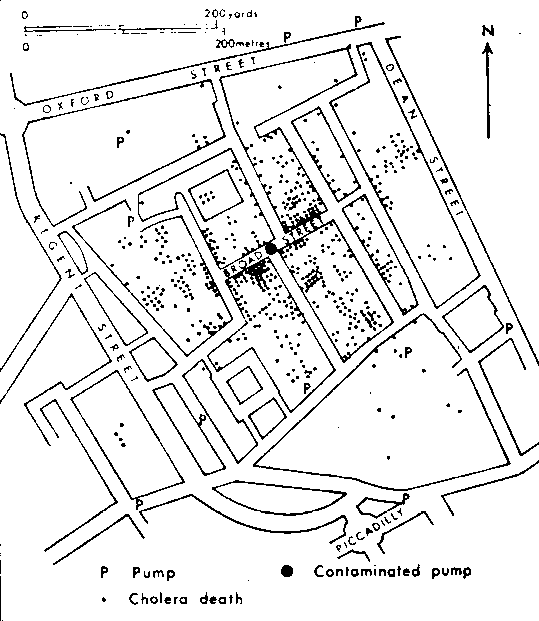
When cholera returned, in 1854, Snow was able to identify a number of small districts served by two water companies, one still supplying a fecal cocktail and one that had moved its intake pipes to Thames Ditton, above the tidal section. Snow compiled tables showing a strong connection in these districts between cholera mortality and water source. Snow’s “grand experiment” was supposed to be decisive: there were no pertinent variables distinguishing the two populations other than the origins of their drinking water. As it turned out, the critical evidence came not from this study of commercially piped river water but from a fine-grained map showing the roles of different wells. Snow lived on Sackville Street, just around the corner from the Royal Academy of Arts, and in late August cholera erupted practically next door, in an area of Soho. It was, Snow later wrote, “the most terrible outbreak of cholera which ever occurred in this kingdom”—more than five hundred deaths in ten days.

He produced one of the most famous maps ever-one that Edward Tufte praises in his book "The visual display of quantitative information".

Using the Weekly Return of Births and Deaths, which was published by William Farr, a statistician in the Office of the Registrar-General, and a staunch anti-contagionist, Snow homed in on the microstructure of the epidemic. He began to suspect contaminated water in a well on Broad Street whose pump served households in about a two-block radius. The well had nothing to do with commercially piped water—which in this neighborhood happened to be relatively pure—but it was suspicious nonetheless. Scientists at the time knew no more about the invisible constituents of the water supply than they did about the attributes of specific miasmas—Snow wrote that the “morbid poison” of cholera “must necessarily have some sort of structure, most likely that of a cell,” but he could not see anything that looked relevant under the microscope—so even Snow still used smell as an important diagnostic sign. He recorded a local impression that, at the height of the outbreak, the Broad Street well water had an atypically “offensive smell,” and that those who were deterred by it from drinking the water did not fall ill. What Snow needed was not the biological or chemical identity of the “morbid poison,” or formal proof of causation, but a powerful rhetoric of persuasion. The map Snow produced, in 1854, plotted cholera mortality house by house in the affected area, with bars at each address that showed the number of dead. The closer you lived to the Broad Street pump, the higher the pile of bars. A few streets away, around the pump at the top of Carnaby Street, there were scarcely any bars, and slightly farther, near the Warwick Street pump, there were none at all.

This is a post by Tufte, describing a visit to John Snow's cholera-infected waterpump, and the image above is part of the map itself. Snow backed this up with additional data

Snow’s study of the neighborhood enabled him to add persuasive anecdotal evidence to the anonymity of statistics. Just across from the Broad Street pump was the Poland Street workhouse, whose wretched inmates, living closely packed in miserable conditions, should have been ideal cholera victims. Yet the disease scarcely touched them. The workhouse, it emerged, had its own well and a piped supply from a company with uncontaminated Thames water. Similarly, there were no cholera deaths among the seventy workers in the Lion Brewery, on Broad Street. They drank mainly malt liquor, and the brewery had its own well. What Snow called the “most conclusive” evidence concerned a widow living far away, in salubrious Hampstead, and her niece, who lived in “a high and healthy part of Islington”: neither had gone anywhere near Broad Street, and both succumbed to cholera within days of its Soho outbreak. It turned out that the widow used to live in the affected area, and had developed a taste for the Broad Street well water. She had secured a supply on August 31st, and, when her niece visited, both drank from the same deadly bottle.

Next, Snow had to show how the Broad Street well had got infected, and for this he made use of the detailed knowledge of a local minister, Henry Whitehead. The minister had at first been skeptical of Snow’s waterborne theories, but became convinced by the evidence the doctor was gathering. Whitehead discovered that the first, or “index,” case of the Soho cholera was a child living on Broad Street: her diapers had been rinsed in water that was then tipped into a cesspool in front of a house just a few feet away from the well. The cesspool leaked and so, apparently, did the well. Snow persuaded the parish Board of Guardians to remove the handle from the Broad Street pump, pretty much ending the Soho cholera outbreak. There’s now a replica of the handleless pump outside a nearby pub named in John Snow’s honor.

All his efforts did not secure is immediate victory, but the unbearable stench of the sewage-laden Thames finally forced the Government to act

In the oppressively hot summer of 1858, London was overwhelmed by what the papers called “the Great Stink.” The already sewage-loaded Thames had begun to carry the additional burden of thousands of newly invented flush water closets, and improved domestic sanitation was producing the paradoxical result of worsened public sanitation. The Thames had often reeked before, but this time politicians fled the Houses of Parliament, on the river’s embankment, or attended with handkerchiefs pressed to their noses. “Whoso once inhales the stink can never forget it,” a newspaper reported, “and can count himself lucky if he live to remember it.” Measures to clean up the Thames had been on the agenda for some years, but an urgent fear of miasmas broke a political logjam, and gave immediate impetus to one of the great monuments of Victorian civil engineering: Sir Joseph Bazalgette’s system of municipal sewers, designed to deposit London’s waste below the city and far from the intakes of its water supply. (The system became fully operational in the mid-eighteen-seventies, and its pipes and pumps continue to serve London today.)

In the event, the Great Stink’s effects on municipal health were negligible: the Weekly Return showed no increase in deaths from epidemic disease, confounding miasmatists’ expectations. When cholera returned to London in 1866, its toll was much smaller, and the main outbreak was traced to a section of Bazalgette’s system which had yet to be completed. In many people’s opinion, Snow, who had died in 1858, now stood vindicated. And yet the improved municipal water system that rid the city of cholera had been promoted by sanitary reformers who held to the miasmal theory of disease—people who believed that sewage-laden drinking water was only a minor source of miasmas, but disgusting all the same. The right things were done, but not necessarily for the right scientific reasons.

The best we can hope for.

Sunday, October 29, 2006

What good is happiness? It can't buy you money.

Robert H. Frank is a distinguished left-leaning Economist. In "Passions within Reason", he invented an explanation for why emotions exist. In this "Economic Scene" article, he argues that
1. Economic Growth does not make a society happier over time

Many critics of economic growth interpret this finding to imply that continued economic growth should no longer be a policy goal in developed countries. They argue that if money buys happiness, it is relative, not absolute, income that matters. As incomes grow, people quickly adapt to their new circumstances, showing no enduring gains in measured happiness. Growth makes the poor happier in low-income countries, critics concede, but not in developed countries, where those at the bottom continue to experience relative deprivation.

but
2. Economic Growth is still important because happiness is not the point of growth.

Subjective well-being is typically measured from responses to survey questions like, “All things considered, how satisfied are you with your life these days?” People’s responses are informative. They tend to be consistent over time and are highly correlated with assessments of them made by their friends. Positive self-assessments are strongly linked with behaviors indicating psychological health. Thus, people who report high levels of subjective well-being are more likely to initiate social contacts with friends and more likely to respond to requests for assistance from strangers. They are less likely than others to suffer from psychosomatic illnesses, seek psychological counseling or attempt suicide.
In short, self-assessments of subjective well-being tell us something important about human welfare. Yet the mere fact that they do not ratchet up over time provides little reason to question the desirability of economic growth.

Why is this? Because our emotions (motivational system) evolved to ensure that we can never be permanently happy- we are survival machines for our genes.

The purpose of the human motivational system, according to psychologists, is not to make people feel happy, but rather to motivate actions that promote successful life outcomes. To be effective, this system should be flexible and adaptive, which it is. For example, people who become disabled typically experience deep depression after their accidents, but often adapt surprisingly quickly, soon reporting a mix of moods similar to what they had experienced before. Lottery winners invariably experience joy on receiving their windfalls, but often describe such feelings as fleeting.

Since life is a continuing competitive struggle, this is as it should be. Accident victims who can recover their psychological footing quickly will function more effectively in their new circumstances than those who dwell unhappily on their misfortune. Windfall recipients who quickly recover their hunger for more will compete more effectively than those who linger in complacent euphoria.

A Holocaust survivor once told me that his existence in the camps took place in two separate psychological spaces. In one, he was acutely aware of the unspeakable horror of his situation. But in the other, life seemed eerily normal. In this second space, each day presented challenges, and days in which he coped relatively successfully with them felt much like the good days of the past. To survive, he explained, it was critical to spend as much time as possible in the second space and as little as possible in the first.

These observations highlight the weakness of subjective well-being as a metric of welfare. The fact that people adapt quickly to new circumstances, good or bad, is just a design feature of the brain’s motivational system. The fact that a paraplegic may continue to be happy does not imply that his condition has not reduced his welfare.

Indeed, many well-adjusted paraplegics report that they would undergo surgery entailing substantial risk of death if doing so promised to restore their mobility. Similarly, the fact that people may adapt quickly to higher incomes says nothing about whether economic growth makes them better off.

This is a profound observation. Tyler Cowen quotes Daniel Ariely making a similar point about his life after suffering severe burn over his entire body

...my personal reflections are only in partial agreement with the literature on well being (see also Levav 2002). In terms of agreement with adaptation, I find myself to be relatively happy in day-to-day life – beyond the level predicted (by others as well as by myself) for someone with this type of injury. Mostly, this relative happiness can be attributed to the human flexibility of finding activities and outlets that can be experienced and finding in these, fulfillment, interest, and satisfaction. For example, I found a profession that provides me with a wide-ranging flexibility in my daily life, reducing the adverse effects of my limitations on my ability. Being able to find happiness in new ways and to adjust one’s dreams and aspirations to a new direction is clearly an important human ability that muffles the hardship of wrong turns in life circumstances. It is possible that individuals who are injured at later stages of their lives, when they are more set in terms of their goals, have a more difficult time adjusting to such life-changing events.

However, these reflections also point to substantial disagreements with the current literature on well-being. For example, there is no way that I can convince myself that I am as happy as I would have been without the injury. There is not a day in which I do not feel pain, or realize the disadvantages in my situation. Despite this daily awareness, if I had participated in a study on well-being and had been asked to rate my daily happiness on a scale from 0 (not at all happy) to 100 (extremely happy), I would have probably provided a high number, probably as high as I would have given if I had not had this injury. Yet, such high ratings of daily happiness would have been high only relative to the top of my privately defined scale, which has been adjusted downward to accommodate the new circumstances and possibilities (Grice 1975). Thus, while it is possible to show that ratings of happiness are not influenced much based on large life events, it is not clear that this measure reflects similar affective states.

As a mental experiment, imagine yourself in the following situation. How you would rate your overall life satisfaction a few years after you had sustained a serious injury. How would your ratings reflect the impact of these new circumstances? Now imagine that you had a choice to make whether you would want this injury. Imagine further that you were asked how much you would have paid not to have this injury. I propose that in such cases, the ratings of overall satisfaction would not be substantially influenced by the injury, while the choice and willingness to pay would be - and to a very large degree. Thus, while I believe that there is some adaptation and adjustment to new life circumstances, I also believe that the extent to which such adjustments can be seen as reflecting true adaptation (such as in the physiological sense of adaptation to light for example) is overstated. Happiness can be found in many places, and individuals cannot always predict their ability to do so. Yet, this should not undermine our understanding of horrific life events, or reduce our effort to eliminate them.

Economic growth is not about making people happier, but about increasing their freedom of action. People (individually and collectively) get to make choices that would otherwise have been infeasible. Without the economic growth of the past 50 years, Dan Ariely would not have survived his burns, and society would not have been able to spare the effort and skill that went into rehabilitating him.

Thursday, October 26, 2006

Pangur Ban

I met this cat in "Rattle bag"- a book of poems compiled by Ted Hughes and Seamus Heaney.

This poem was written in 8th century Ireland by a student at the monastery of Carinthia (Irish, 8th century) on a copy of St.Paul's Epistles. (The translation is by Robin Flower)
I and Pangur Ban my cat,
'Tis a like task we are at:
Hunting mice is his delight,
Hunting words I sit all night.

Better far than praise of men
'Tis to sit with book and pen;
Pangur bears me no ill-will,
He too plies his simple skill.

'Tis a merry task to see
At our tasks how glad are we,
When at home we sit and find
Entertainment to our mind.

Oftentimes a mouse will stray
In the hero Pangur's way;
Oftentimes my keen thought set
Takes a meaning in its net.

'Gainst the wall he sets his eye
Full and fierce and sharp and sly;
'Gainst the wall of knowledge I
All my little wisdom try.

When a mouse darts from its den,
O how glad is Pangur then!
O what gladness do I prove
When I solve the doubts I love!

So in peace our task we ply,
Pangur Ban, my cat, and I;
In our arts we find our bliss,
I have mine and he has his.

Practice every day has made
Pangur perfect in his trade;
I get wisdom day and night
Turning darkness into light.

Rhythmic grumbling

Back in Bombay, 11;20 p.m

I thought Deepavali would be past
but I returned while ropes of colored lights
still stammered in the windows,
and flights of bullying rockets
roused me from my bed
to sit listening
to little boys playing
with toy pistols in the street below.
They sound like gardeners clipping hedges in the park.


Postscript:
Jayan insists that I include his version:

Deepavali past
Ropes of colored lights on windows
Flights of bullying rockets
Tearing the smoked up sky

Almost unbearable

Tyler Cowen says it is about the behavioral economics of pain. The only way I could read this article by Dan Ariely was by taking frequent breaks.

However, it is wonderfully written.

Wednesday, October 25, 2006

The Roman Way

Nick Szabo recently blogged about an article on the Lex Gabina, published in the New York Times by Robert Harris.

I recently devoured two novels by Robert Harris: "Imperium" and "Pompeii". "Imperium" is by far the better novel, but "Pompeii" has magnificent passages describing the eruption of Pompeii, and wonderful descriptions of the achievements of Roman engineering.
The book begins with this quote:

How can we withhold our respect from a water system that, in the first century AD, supplied the city of Rome with substantially more water than was supplied in 1985 to New York City?

A Trevor Hodges,
(Author of Roman Aqueducts & Water Supply)

And this passage does resonate with me

Men mistook measurement for understanding. And they always had to put themselves at the centre of everything. That was their greatest conceit. The earth is becoming warmer- it must be our fault! The mountain is destroying us- we have not propitiatied the gods! It rains too much, it rains too little- a comfort to think that these thjings are somehow connected to our behaviour, that if we lived only a little better, a little more frugally, our virtue would be rewarded.

Tuesday, October 24, 2006

Imbeciles

What are we supposed to make of this "news"?

There are 20 reported cases of HIV positive patients in the Patna Police hospital. Concerned by the rising numbers of HIV cases in the state police force, doctors have forwarded some suggestions to headquarters.

How many would be an acceptable number? Is this number out of proportion, considering how many people outside the Police force are HIV+?

They feel that all new recruits in the Bihar Police force should carry HIV negative certificates and that men presently serving in the force should undergo HIV tests. They also say that such tests should be carried out periodically.

What is the intention here? If this is good for the Police, why should this not be done for the general population as well?

Says Bihar Home Secretary Afzal Amanullah, "Doctors have reported that there has been a considerable rise in HIV positice (sic) cases among officers, not only among those ranked lower and constables, but senior officials as well."

Oh my goodness, not only petty constables, but officers as well? Intolerable. But why?

The real numbers of those suffering from the dreaded virus could be mind-boggling and the government's intervention is expected before the situation compeletly (sic) gets out of hand.

What should the Government do? Surely it can't be so difficult to ask a few questions when you are handed a story.

Monday, October 23, 2006

Parting of ways

Via ALdaily: The New Statesman has published a fascinating article by William Dalrymple on a 19th century clash of civilizations.

At 4pm on a hazy, warm, sticky winter's day in Rangoon in November 1862, soon after the end of the monsoon, a shrouded corpse was escorted by a small group of British soldiers to an anonymous grave at the back of a walled prison enclosure. The enclosure lay overlooking the muddy brown waters of the Rangoon River, a little downhill from the great gilt spire of the Shwedagon Pagoda. Around it lay the newly built cantonment area of the port - a pilgrimage town that had been seized, burned and occupied by the British only ten years earlier.

The bier of the State Prisoner - as the deceased was referred to - was accompanied by his two sons and an elderly mullah. The ceremony was brief. The British authorities had made sure not only that the grave was already dug, but that quantities of lime were on hand to guarantee the rapid decay of both bier and body. When the shortened funeral prayers had been recited, the earth was thrown over the lime, and the turf carefully replaced to disguise the place of burial. A week later the British Commissioner, Captain H N Davis, wrote to London to report what had passed, adding:

Have since visited the remaining State Prisoners - the very scum of the reduced Asiatic harem; found all correct . . . The death of the ex-King may be said to have had no effect on the Mahomedan part of the populace of Rangoon, except perhaps for a few fanatics who watch and pray for the final triumph of Islam. A bamboo fence surrounds the grave, and by the time the fence is worn out, the grass will again have properly covered the spot, and no vestige will remain to distinguish where the last of the Great Moghuls rests.

His point in the article appears to be that, as that the British achieved ascendency in India, and evangelical Christians became more prominent among the British, they gradually changed character from being just another trading community in a vast subcontinent, to a foreign presence which aggressively rejected any hint of being influenced by the country they inhabited.

The wills written by dying East India Company servants show that the practice of cohabiting with Indian bibis quickly declined: they turn up in one in three wills between 1780 and 1785, but are present in only one in four between 1805 and 1810. By the middle of the century, they have all but disappeared. In half a century, a vibrantly multicultural world refracted back into its component parts; children of mixed race were corralled into what became in effect a new Indian caste - the Anglo-Indians - who were left to run the railways, posts and mines.

He draws a parallel with our times.

Just like it is today, this process of pulling apart - of failing to talk, listen or trust each other - took place against the background of an increasingly aggressive and self-righteous west, facing ever stiffer Islamic resistance to western interference. For, as anyone who has ever studied the story of the rise of the British in India will know well, there is nothing new about the neo-cons. The old game of regime change - of installing puppet regimes, propped up by the west for its own political and economic ends - is one that the British had well mastered by the late 18th century.

By the 1850s, the British had progressed from aggressively removing independent-minded Muslim rulers, such as Tipu Sultan, who refused to bow before the will of the hyperpower, to destabilising and then annexing even the most pliant Muslim states. In February 1856, the British unilaterally annexed the prosperous kingdom of Avadh (or Oudh), using the excuse that the nawab, Wajid Ali Shah, a far-from-belligerent dancer and epicure, was "debauched".

The war that followed was essentially religious

The eventual result of this clash of rival fundamentalisms came in 1857 with the cataclysm of the Great Mutiny. Of the 139,000 sepoys of the Bengal army, all but 7,796 turned against their British masters, and the great majority headed straight to Zafar's court in Delhi, the centre of the storm. Although it had many causes and reflected many deeply held political and economic grievances - particularly the feeling that the heathen foreigners were interfering in the most intimate way with a part of the world to which they were entirely alien - the uprising was articulated as a war of religion, and especially as a defensive action against the rapid inroads that missionaries, Christian schools and Christian ideas were making in India, combined with a more generalised fight for freedom from occupation and western interference.

Although the great majority of the sepoys were Hindus, in Delhi a flag of jihad was raised in the principal mosque, and many of the insurgents described themselves as mujahedin or jihadis. Indeed, by the end of the siege, after a significant proportion of the sepoys had melted away, hungry and dis pirited, the proportion of jihadis in Delhi grew to be about half of the total rebel force, and included a regiment of "suicide ghazis" from Gwalior who had vowed never to eat again and to fight until they met death at the hands of the kafirs, "for those who have come to die have no need for food".

One of the causes of unrest, according to a Delhi source, was that "the British had closed the madrasas". These words had no resonance to the Marxist historians of the 1960s who looked for secular and economic grievances to explain the uprising. Now, in the aftermath of the attacks of 11 September 2001 and 7 July 2005, they are phrases we understand all too well. Words such as jihad scream out of the dusty pages of the Urdu manuscripts, demanding attention.

There is a direct link between the jihadis of 1857 and those we face today. The reaction of the educated Delhi Muslims after 1857 was to reject both the west and the gentle Sufi traditions of the late Mughal emperors, whom they tended to regard as semi-apostate puppets of the British; instead, they attempted to return to what they regarded as pure Islamic roots.

With this in mind, disillusioned refugees from Delhi founded a mad rasa in the Wahhabi style at Deoband, in Delhi, that went back to Koranic basics and rigorously stripped out anything European from the curriculum. One hundred and forty years later, it was out of Deobandi madrasas in Pakistan that the Taliban emerged to create the most retrograde Islamic regime in modern history, a regime that in turn provided the crucible from which emerged al-Qaeda, and the most radical Islamist counter-attack the modern west has yet had to face.

A fascinating tale, but there is nothing uniquely sub-continental about this story: every country in Asia, Africa, and South America has a similar tale to tell. China and Korea suffered unbelievable horrors in the same period. General Gordon became a martyr to Victorian England when the Sudanese mahdi killed him at Khartoum.
It may be possible to trace the origins of today's Islamic jihads to events that are over a century old, but I am not sure that it helps. They were a negligible presence until a bare 20 years ago, and they the origins of today's terror are equally close to hand: the U.S. armed and trained the mujahideen to battle the Soviet infidel, Pakistan gave them succor in an effort to win American kudos (and arms with which to confront India) and the Saudis funded them to appease their own people.
The fuel that feeds this constant skirmishing is the evident illegitimacy of the governments of every Islamic state from Islamabad to Casablanca- it is not only the British who parted ways with the people they ruled. Their unfortunate people, growing more impoverished by the year, and repressed by their political masters, are seeking to escape into an imagined past of Islamic purity and potency.
I am sure Dalrymple's book will illuminate the 19th century, but will cast only an indirect light on the early 21st century.

Now for something quite different

Nick Szabo has posted some really good entries recently.

One post is about the contrasting fates of medieval China and Portugal. I loved the image on the right, which contrasts the size of Columbus' Santa Maria with that of one of the Zheng He "treasure ships" which the Chinese Emperor sent off on a voyage to "show the flag".

Another nice blog entry is about the Pigeonhole principle.
The pigeonhole principle readily proves that there are people in Ohio with the same number of hairs on their head, that you can't eliminate the possibility of hash collisions when the set of possible input data is larger than the possible outputs, that if there are at least two people in a room then there must be at least two people in that room with the same number of cousins in the room, and that a lossless data compression algorithm must always make some files longer. This is just the tip of the iceberg of what the pigeonhole principle can help prove.
And he claims his math is rusty!

Sunday, October 22, 2006

With stupidity the gods themselves contend..

More than two centuries after the great works of David Hume and Adam Smith, 20 years after the "Japan scare", the head of Der Spiegel's Berlin office publishes this.

The world war for wealth calls for a different, but every bit as contradictory, solution

and

The two camps are divided between Europe and America on the one side and Asia on the other. But so far there has been no shouting, no bluster and no shooting. Nor have there been any threats, demands or accusations. On the contrary, there is an atmosphere of complete amiability wherever our politicians and business executives might travel in Asia. At airports in Beijing, Jakarta, Singapore and New Delhi red carpets lie ready, Western national anthems can be played flawlessly on cue -- and they even parry Western complaints about intellectual property theft, environmental damage and human rights abuses with a polite patience that can only be admired. The Asians are the friendliest conquerors the world has ever seen.

and

Their secret is stoic perseverance, the weapon they use to pursue their own interests while at the same time disregarding ours. What looks like a market economy in Asia, actually follows the rules of a type of society which former German chancellor Ludwig Erhard liked to call a "termite state." In a termite state, it is the collective rather than the individual which sets the agenda. Tasks that serve the aims of society's leaders are assigned to the individual in a clandestine manner that is barely perceptible to outsiders. It is a state that encourages as much collective behavior as possible but only as much freedom as necessary. We don't know what they feel, we don't know what they think and we have no way of guessing what they are planning. Indeed, this is what makes China a dark superpower.

Beyond parody.

The battle of the loonies

I adore Richard Dawkins' writings on Evolution but, while I generally agree with him on religion, I find his zeal disturbing. Terry Eagleton's incoherent, incomprehensible review in the London Review of Books, however, is bound to confirm Dawkins' opinions of his opponents.
What could Terry mean by

For Judeo-Christianity, God is not a person in the sense that Al Gore arguably is. Nor is he a principle, an entity, or ‘existent’: in one sense of that word it would be perfectly coherent for religious types to claim that God does not in fact exist. He is, rather, the condition of possibility of any entity whatsoever, including ourselves. He is the answer to why there is something rather than nothing. God and the universe do not add up to two, any more than my envy and my left foot constitute a pair of objects.

How does he know that there is such a condition? And did God himself whisper in Terry Eagleton's ear so that he knows this:

This, not some super-manufacturing, is what is traditionally meant by the claim that God is Creator. He is what sustains all things in being by his love; and this would still be the case even if the universe had no beginning. To say that he brought it into being ex nihilo is not a measure of how very clever he is, but to suggest that he did it out of love rather than need. The world was not the consequence of an inexorable chain of cause and effect. Like a Modernist work of art, there is no necessity about it at all, and God might well have come to regret his handiwork some aeons ago. The Creation is the original acte gratuit. God is an artist who did it for the sheer love or hell of it, not a scientist at work on a magnificently rational design that will impress his research grant body no end.

This is the point at which I gave up and went to sleep.

Hey, You Got Something To Eat?

asks A Goat, in The Onion.