
Friday, October 16, 2009


Wednesday, September 23, 2009
Sunday, March 29, 2009
Hopped up on Coffee
A video of someone like me after a day of drinking coffee at work
HT: Ernie who also to a Malcolm Gladwell article about coffee.
Andrew Gelman has a nice post about someone who performed
Andrew Gelman has a nice post about someone who performed
a randomized, blinded, placebo-controlled experiment on himselfand
was astonished to see how much the caffeine had affected him. He was stronger -- his power output was 3 percent greater -- and faster. In fact, he said the average speed for his tests when he used caffeine was faster than his fastest speed when he was not using caffeine
Sunday, January 25, 2009
Achilles and Hector
Two birds in full throated song on a damp, dark winter evening in London, while people hurry past, bundled against the cold.

Since Time Immemorial
Merriam Webster: a time antedating a period legally fixed as the basis for a custom or right.
While listening to the BBC, I was amazed to learn that this phrase has a precise meaning in English Law.
Checking online, I was even more astonished to learn just how long ago this phrase was defined. Wikipedia:
While listening to the BBC, I was amazed to learn that this phrase has a precise meaning in English Law.
Checking online, I was even more astonished to learn just how long ago this phrase was defined. Wikipedia:
In 1276, this time was fixed by statute as the 3rd September 1189, the date of the coronation of King Richard I (Richard the Lionheart). Proof of unbroken possession or use of any right since that date made it unnecessary to establish the original grant. In 1832, the plan of dating legal memory from a fixed time was abandoned; instead, it was held that rights which had been enjoyed for twenty years (or as against the Crown thirty years) should not be impeached merely by proving that they had not been enjoyed before.
Sunday, January 11, 2009
Overnight success can be a long time coming
John Kay writes an article on why choice matters
Choice is not an end in itself, but a means to the good services everyone seeks. Choice is working best when no one wants to exercise it.and on a pernicious myth about markets.
But those who defend the market system are often the system’s worst enemies. I recently listened to a group of businessmen deploring the anti-capitalist tone of much of what is taught in schools. They had a point. But they spoiled it by promoting a description of capitalism that was at once repulsive and false.Over at Coding Horror, Jeff Atwood perfectly illustrates this point
They talked about “wealth creation”, although most of what they described seemed to be a diversion of wealth for the benefit of particular individuals rather than the creation of new wealth. They thought private sector activities – such as securities trading and automobile manufacture – created wealth; while public sector activities – such as health and education – used wealth up. They stressed that financial rewards were the mainspring of innovation, apparently unaware that material gain was not even at the back of the minds of those who invented computers, discovered antibiotics or created green revolution crops.
Honestly, I look forward to waking up someday two or three years from now and doing the exact same thing I did today: working on the Stack Overflow code, eking out yet another tiny improvement or useful feature. Obviously we want to succeed. But on some level, success is irrelevant, because the process is inherently satisfying. Waking up every day and doing something you love -- even better, surrounded by a community who loves it too -- is its own reward. Despite being a metric ton of work.Wealth matters: it allows you to focus better on what you really want to do, but I would never be able to get any real work done if the only reason I had to do it was a bonus or promotion. Of course, to be able to take that attitude, you already need to have some amount of basic security.
Thursday, January 01, 2009
Waltz with Bashir
Watching Waltz with Bashir: A very good start to the year, and the second great animated movie I have seen this year.
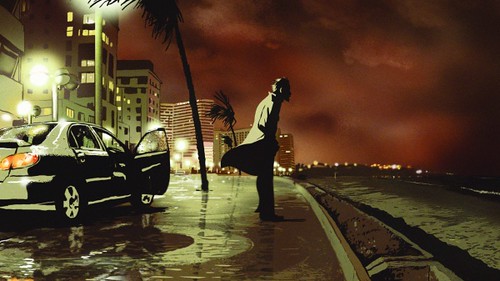
I was drawn to seeing this movie by the poster above: it felt like a scene from Marine Drive in Mumbai. It is a documentary but, being an animation, it has no need for reconstructions of events which nobody filmed. Too much sepia, but the visuals are wonderful, the figures move stiffly but still do a great job of conveying emotion through body language, and the movie has a glorious soundtrack, and a very droll sense of humour.
I bombed Beirut, I bombed Sidon:
and Enola Gay
How distributed decision making typical of bureaucracies can help create atrocities by dispersing responsibility, how religions are only occasionally about what people believe, and how movies really are a multimedia art form.
Every single trailer in the theater felt like an advertisement for a computer game. The invention of photography forced painting to discover virtues other than realism, and the spread of the movies may have compelled novelists to discover qualities other than plot and scene. What will this new art do to old ones? We will have more movies which are made to go right into a computer game, but will we also see more works like Waltz with Bashir?
Sunday, December 21, 2008
Merry Christmas
A broadcast by the BBC of the Choir of Christ College, Cambridge, celebrating Christmas during the blackout of 1939.
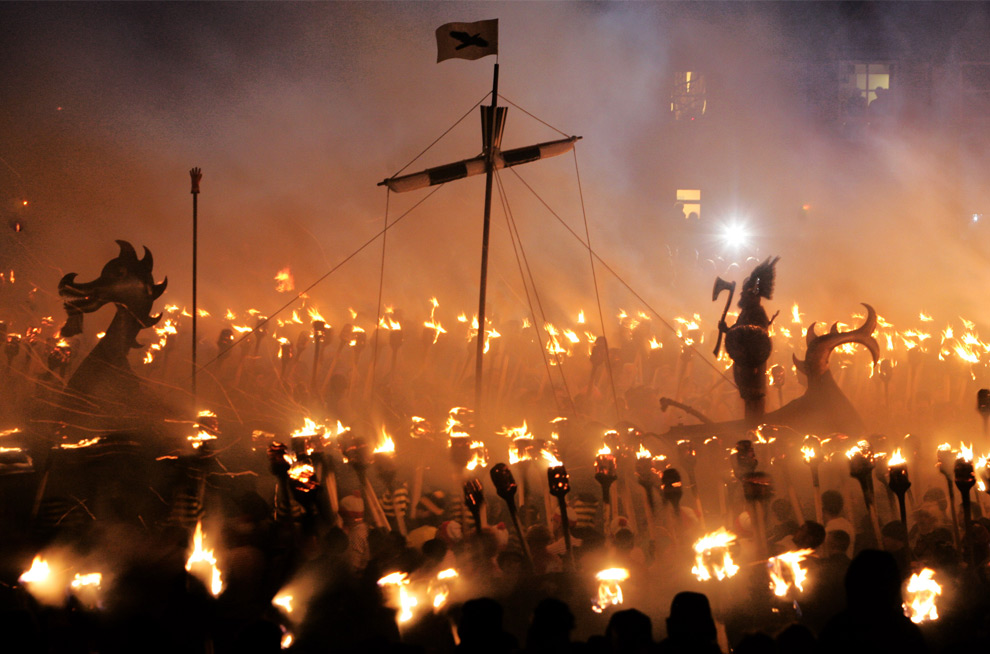
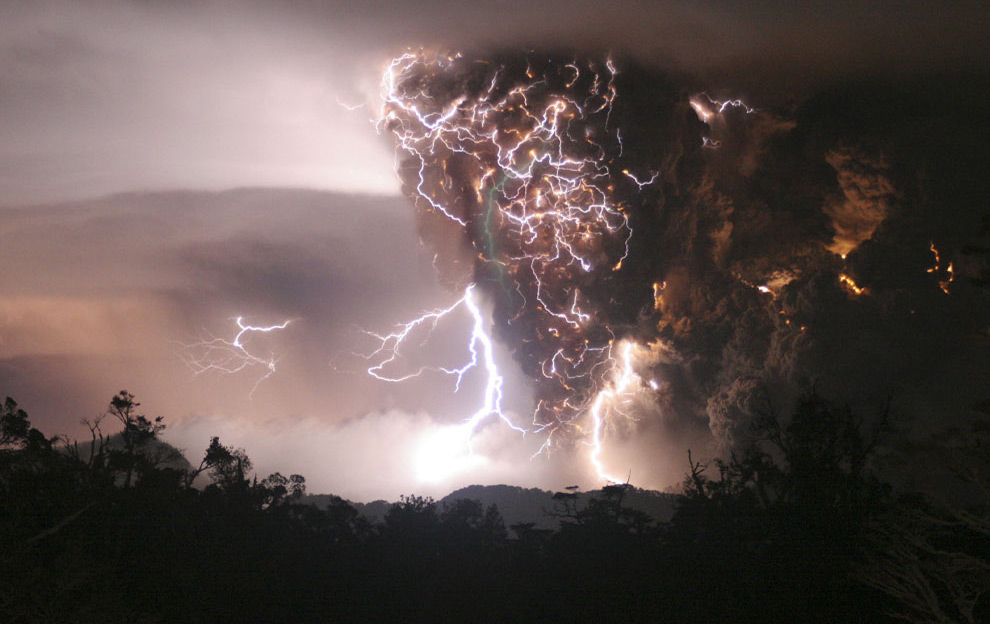
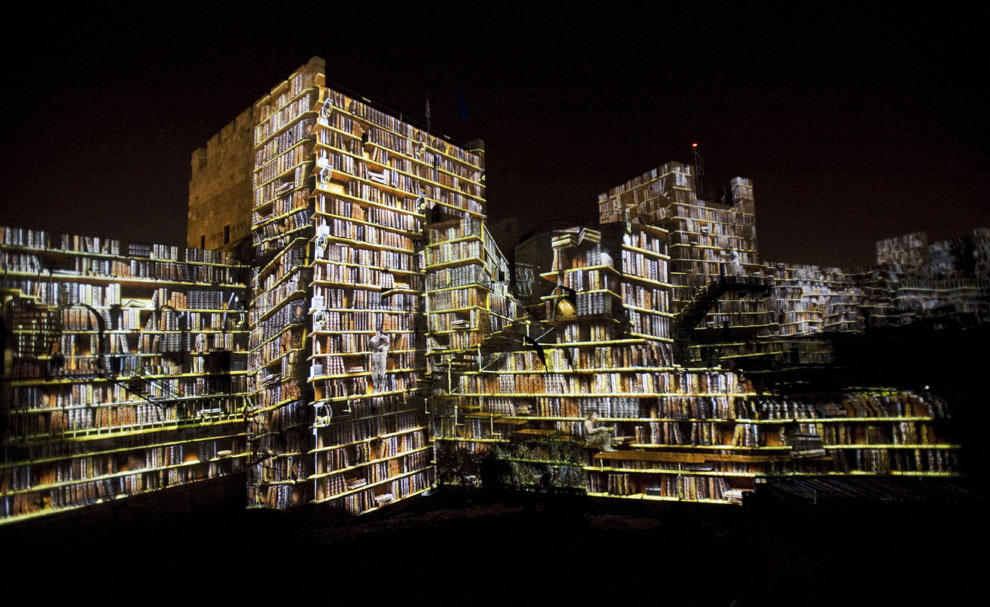
There is something about fire
My favourites from among the "images of the year", published by the Boston Globe. (Text taken directly from the article.) 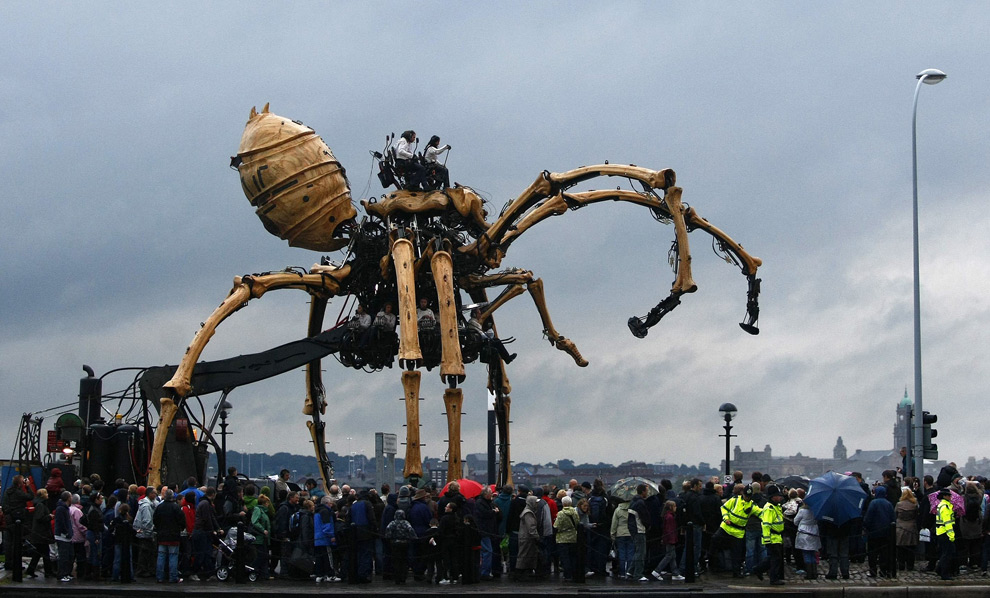
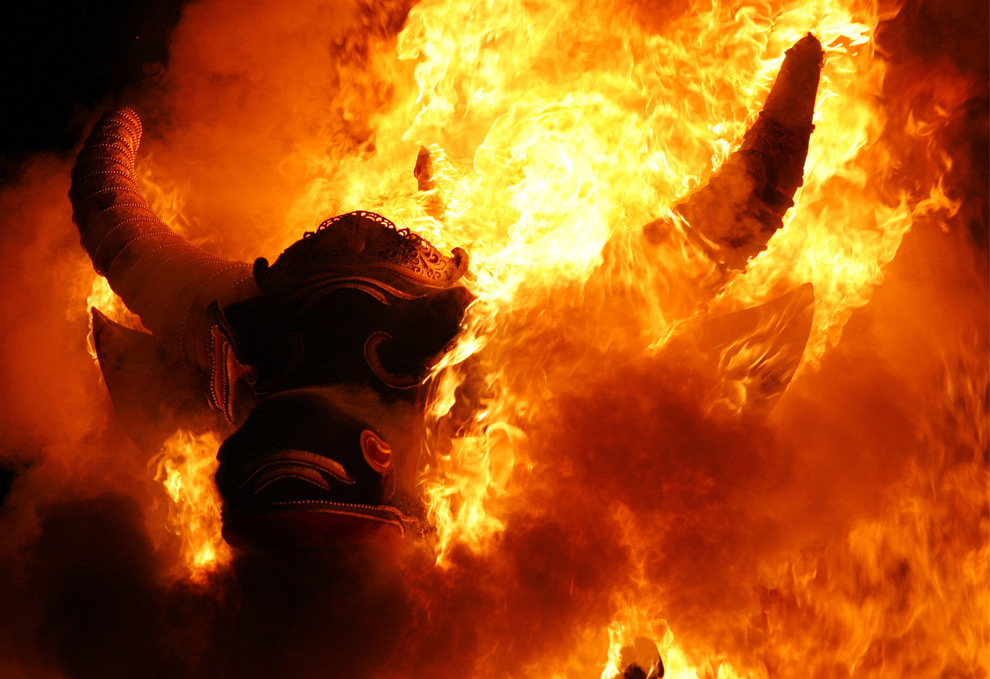
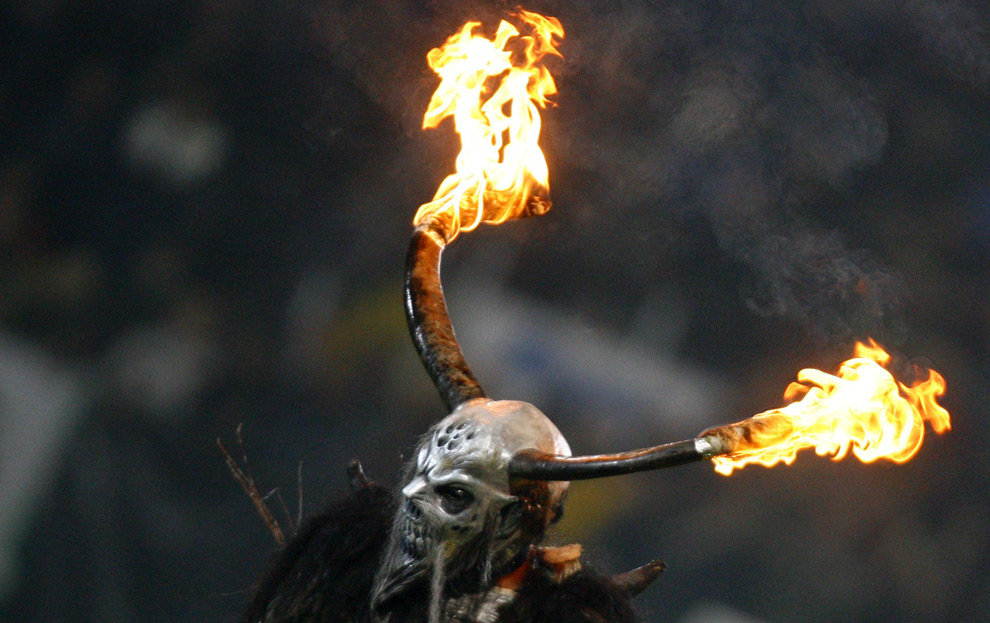

HT: Paul Kedrosky.
A giant mechanical spider, part of a piece of free theater by French company La Machine entitled "Les Mecaniques Servants", walks along the waterfront in Liverpool, England.
A bull sarcophagus in which a member of the Ubud royal family was cremated burns during the funeral ceremony in Ubud, Bali, Indonesia
A man in a traditional "Perchten" costume performs during an Austrian league soccer match in Ried, Austria
The Guizer Jarl is silhouetted as members of his Viking Squad walk around a long boat with burning torches during the annual Up Helly Aa Festival
Lightning bolts appear above and around the Chaiten volcano, as it began its first eruption in thousands of years
The moon and stars light up Mount Everest, also known as Qomolangma, as seen from near Everest Base Camp in the Tibet Autonomous Region
Images of books on shelves are seen projected on the walls of the Tower of David in Jerusalem's Old City

Sunday, December 07, 2008
Monday, December 01, 2008


Thursday, November 27, 2008
Mumbai
Listening to the nauseating effluvia of Arundhati Roy on BBC Radio 4; how much better Emily Dickinson is at a time like this.
After great pain, a formal feeling comes
The Nerves sit ceremonious, like Tombs
The stiff Heart questions was it He, that bore,
And Yesterday, or Centuries before?
The Feet, mechanical, go round
Of Ground, or Air, or Ought
A Wooden way
Regardless grown,
A Quartz contentment, like a stone
This is the Hour of Lead
Remembered, if outlived,
As Freezing persons recollect the Snow
First-Chill-then Stupor-then the letting go
Monday, November 24, 2008
Phrase of the day
Paraprosdokian
I want to die like my father, quietly, in his sleep—not screaming and terrified like his passengers- Bob Monkhouse
A neat step
The Thai army knows what to do with prima donna generals
A MAVERICK Thai general who has threatened to bomb anti-government protesters and drop snakes on them from helicopters has been reassigned as an aerobics teacher, the Bangkok Post said on Friday.HT: Paul Kedrosky
Tom Peters
Some management gurus are more modest than their followers. Tom Peters has lunch with the FT.
On whether management is getting harder
On whether management is getting harder
On the whole, Peters thinks not. We exaggerate the extent of change, he feels. It is the arrogance of modernity to believe that we face unique and unprecedented challenges. What people say now about the internet they used to say about the railways, the telegraph, the radioOn his book
It was not hard science. But what in management is? “It’s mostly luck, for God’s sakes!” Peters says. He feels the same way about this mega blockbuster that made his name: “A decent book with perfect timing” is his verdict. “There’s not an ounce of false humility in that.”On his success
“Look,” Peters confesses, “I was born in 1942, in the US. I was protestant. I had relatively intelligent parents and I was white – that’s the first 99.9 per cent of it. Hard work may have done the rest.”On his neighbour's success
“I had a neighbour who won a Nobel prize for his work on kidneys – he carried out the first effective transplant. I once asked him how he’d done it. ‘We did the most operations,’ he told me. At any point in time there are 10 people up there – one of them does the most.”Malcolm Gladwell says says something similar about excellence in craftwork in his new book
Anything that is cognitively complex seems like it requires at least 10,000 hours… It’s deliberate practice, so it’s focused, determined, in environments where there’s feedback, where there’s a chance to really learn from mistakes. What’s fascinating about this notion that expertise arises only after 10,000 hours of deliberate practice is that it seems to apply incredibly broadly to an astonishing array of different professions - from playing chess to writing classical music to being a brain surgeon to playing hockey…HT: Stefan Stern
Sunday, November 23, 2008
Returning
The New York Times on the reverse brain drain.
We learned new expressions: “He is on tour” (Means: He is traveling. Doesn’t mean: He has joined U2.); “What is your native place?” (Means: Where did your ancestors live? Doesn’t mean: What hospital delivered you?); “Two minutes” (Means: An hour. Doesn’t mean: Two minutes.)

Subscribe to:
Posts (Atom)